


The attic is cramped, the air is stagnant, and your flashlight beam cuts through the dust while you hunt for that elusive hiss. Finding a refrigerant leak is like chasing a ghost in the machine. You need equipment that reacts instantly to ensure your client stays cool.
Precision is your strongest ally in these tight spaces. A dependable sensor stops you from second-guessing your readings on every call. Here are the Best Refrigerant Leak Detectors that help you work with confidence.
Key Takeaways
- Prioritize infrared sensors if you prefer long-term stability and immunity to false alarms from background gases.
- Heated diode sensors offer superior sensitivity for pin-pointing minute leaks, though they require more frequent tip maintenance.
- Ensure the device covers the specific refrigerant gases you handle most often, such as R134a or R1234yf.
- Look for a design that is compact enough to fit in one hand while you maintain your balance on a ladder.
- Verify the battery life and charging method to avoid losing power during a critical repair sequence.
| The Industry Gold Standard |  |
Testo 316-3 Refrigerant Leak Detector | Extremely reliable performance | Detects all common refrigerants | Simple user interface | View on Amazon | Read Review |
| Long Lasting Infrared | 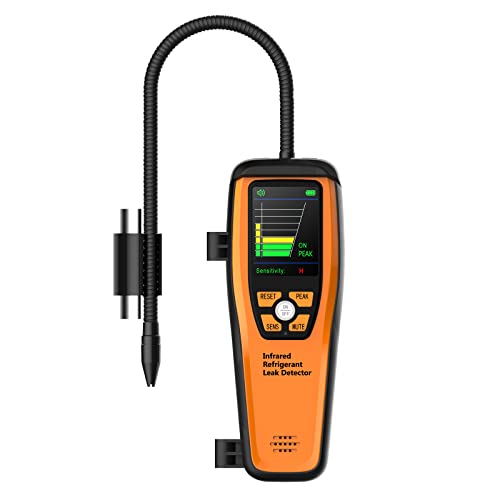 |
Elitech ILD-200 Infrared Leak Detector | Extended sensor lifespan | Quick response time | Rechargeable battery included | View on Amazon | Read Review |
| Precision Diagnostic Tool |  |
Fieldpiece DR82 Infrared Leak Detector | Excellent sensor longevity | High visibility display | Lightweight ergonomic design | View on Amazon | Read Review |
| Versatile Utility Hybrid |  |
SFD201 Dual Gas Leak Detector | Detects two gas types | Rechargeable convenience | Flexible sensor neck | View on Amazon | Read Review |
| Sensitive Heated Diode |  |
Fieldpiece DR58 Heated Diode Detector | High sensitivity levels | Easy to read display | Fast clearing time | View on Amazon | Read Review |
| Budget Entry Point |  |
Elitech CLD-100 Halogen Detector | Very simple operation | Affordable option | Compact design | View on Amazon | Read Review |
| Professional Grade Performance |  |
Elitech ILD-100H Heated Diode Detector | Heated diode sensor | Supports newer refrigerants | Good build quality | View on Amazon | Read Review |
| Intuitive Field Companion |  |
TOPTES RT-108 Leak Detector | Three sensitivity levels | High visibility color | Simple button layout | View on Amazon | Read Review |
| Popular Value Pick |  |
Elitech WJL-6000S Refrigerant Sniffer | Very portable size | Reliable audible response | Affordable replacement sensors | View on Amazon | Read Review |
| Trusted Reliability Choice | 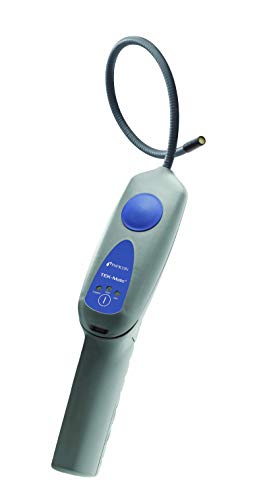 |
Inficon 705-202-G1 Leak Detector | Extremely durable construction | Trusted brand heritage | Consistent, stable readings | View on Amazon | Read Review |
More Details on Our Top Picks
-
Testo 316-3 Refrigerant Leak Detector
If you need a tool that performs without fuss, this is your primary choice. It handles all common refrigerants with ease, making it a reliable workhorse for your daily service calls.
The sensor is highly responsive to small leaks that might otherwise stay hidden. While the interface is minimalist, the audible alarm provides clear feedback when you pin down a problematic valve or connection.
- Brand Name:Testo
- Sensor Type:Heated Diode
- Gas Compatibility:CFC, HFC, HCFC
- Detection Sensitivity:4g/year
- Power Source:2 D batteries
- Additional Feature:Automatic zeroing function
- Additional Feature:Clear visual LED display
- Additional Feature:Rugged housing for field use
-
Elitech ILD-200 Infrared Leak Detector
This unit excels because of its infrared sensor life, which reaches up to 10 years. It provides the stability you want when tracking down intermittent leaks in tight engine bays or compact HVAC systems.
The response time is quick, and it filters out false positives effectively. You will appreciate the rechargeable battery, which keeps you working through long days without hunting for replacements.
- Brand Name:Elitech
- Sensor Type:Infrared
- Gas Compatibility:All halogenated refrigerants
- Detection Sensitivity:4g/year
- Power Source:USB rechargeable lithium battery
- Additional Feature:Multiple sensitivity levels
- Additional Feature:Peak hold function for leaks
- Additional Feature:Durable carrying case
-
Fieldpiece DR82 Infrared Leak Detector
Fieldpiece designed this for the technician who demands rapid response times. It uses an infrared sensor that resists contamination, ensuring your readings stay accurate even in harsh environments.
The backlit LCD screen makes it simple to read your results in dark mechanical rooms or attics. Its compact frame is easy to hold, and the battery life is built to survive a full shift.
- Brand Name:Fieldpiece
- Sensor Type:Infrared
- Gas Compatibility:CFC, HFC, HCFC, HFO
- Detection Sensitivity:0.03 oz/year
- Power Source:USB rechargeable battery
- Additional Feature:Bar graph display mode
- Additional Feature:Audible and visual alarms
- Additional Feature:Rugged, weather-resistant casing
-
SFD201 Dual Gas Leak Detector
Most detectors stick to one lane, but this tool tracks both refrigerants and combustible gases. It is a smart option if you frequently switch between AC work and heating systems during a single visit.
The dual sensors work well to isolate specific leaks. Just remember that this is a jack of all trades, so it may not match the specialized speed of a dedicated, high-end refrigerant sniffer.
- Brand Name:Generic/SFD
- Sensor Type:Semiconductor
- Gas Compatibility:Refrigerants and combustibles
- Power Source:Rechargeable battery
- Additional Feature:Adjustable sensitivity settings
- Additional Feature:Audible and visual alerts
- Additional Feature:Compact handheld form
-
Fieldpiece DR58 Heated Diode Detector
The DR58 shines when you need to track tiny trace leaks that are difficult to locate with other sensors. It uses a heated diode that is highly sensitive to the presence of refrigerant molecules.
Because it is so sensitive, you might find it occasionally triggers in areas with high background noise. However, the onboard calibration helps you maintain accuracy when working in varying conditions.
- Brand Name:Fieldpiece
- Sensor Type:Heated Diode
- Gas Compatibility:CFC, HFC, HCFC, HFO
- Detection Sensitivity:0.01 oz/year
- Power Source:USB rechargeable
- Additional Feature:Backlit LCD screen
- Additional Feature:Rugged housing
- Additional Feature:Built-in filter system
-
Elitech CLD-100 Halogen Detector
If you are just starting out or need a backup tool for your truck, the CLD-100 is a straightforward choice. It does exactly what it says on the box without complex menus to clutter your workflow.
It uses a halogen sensor that reacts quickly to common refrigerant leaks. It is not the most refined detector available, but it gets the job done for basic residential service tasks.
- Brand Name:Elitech
- Sensor Type:Corona Discharge
- Gas Compatibility:CFCs, HCFCs, HFCs
- Power Source:C batteries
- Additional Feature:Audible leak indicator
- Additional Feature:Adjustable sensitivity knob
- Additional Feature:Flexible gooseneck probe
-
Elitech ILD-100H Heated Diode Detector
This model brings a more sophisticated heated diode sensor to the table compared to standard hobbyist tools. It manages to track modern refrigerants like R1234YF with consistent accuracy.
The build feels solid, and the visual indicators help you home in on a leak quickly. It is an excellent middle ground for technicians who want pro features without an excessive price tag.
- Brand Name:Elitech
- Sensor Type:Heated Diode
- Gas Compatibility:R22, R410A, R134A, R1234YF
- Detection Sensitivity:4g/year
- Power Source:Rechargeable battery
- Additional Feature:Multiple sensitivity levels
- Additional Feature:Peak hold capability
- Additional Feature:Audible alarm toggle
-
TOPTES RT-108 Leak Detector
The RT-108 features an easy-to-use interface that allows you to swap through three sensitivity levels with a single button press. This is a massive help when you are trying to ignore background vapors and focus on the actual leak.
The orange housing makes it easy to find in a messy toolbox. While it is a bit bulkier than some competitors, the reliable detection of common freons makes it a worthy addition to your kit.
- Brand Name:TOPTES
- Sensor Type:Halogen Ionization
- Gas Compatibility:R134a, CFCs, HCFCs, HFCs
- Power Source:3 AAA batteries
- Additional Feature:Audio and visual alerts
- Additional Feature:Flexible probe neck
- Additional Feature:Auto-off power saving
-
Elitech WJL-6000S Refrigerant Sniffer
You have likely seen this tool in many technician kits because it is both compact and effective. It is a no-nonsense sniffer that works well for routine maintenance checks on residential AC units.
It is responsive and provides an audible alarm that increases in frequency as you get closer to the source. It lacks the advanced sensors of premium models, but it is highly dependable for everyday leak hunting.
- Brand Name:Elitech
- Sensor Type:Corona Discharge
- Gas Compatibility:R22, R410A, R134A, 1234YF
- Power Source:4 AAA batteries
- Additional Feature:Sensitivity adjustment knob
- Additional Feature:Flexible sensor probe
- Additional Feature:Visual leak indicators
-
Inficon 705-202-G1 Leak Detector
Inficon is a name you associate with high-end engineering, and this detector is a staple in the industry. It uses a proven sensor design that ignores temperature fluctuations, which keeps your readings steady.
This tool is a scalpel in a room full of butter knives. It might not have the flashy digital screens of modern units, but its consistent performance makes it a favorite for seasoned pros.
- Brand Name:Inficon
- Sensor Type:Heated Diode
- Gas Compatibility:All common refrigerants
- Power Source:C batteries
- Additional Feature:High/low sensitivity switch
- Additional Feature:Fast sensor warm-up
- Additional Feature:Proven, long-lasting hardware
Frequently Asked Questions
Can I use one detector for all types of refrigerants?
Most modern detectors are designed for universal compatibility with common CFC, HFC, and HCFC refrigerants. However, always check the technical specifications for specific support for newer, flammable HFO blends. Using the right tool for the gas type is essential for safety.
How often should I calibrate my refrigerant detector?
Sensors degrade over time, losing their sharpness like a dull knife. You should perform a professional calibration at least once a year. If you use the device daily, consider checking it every six months to maintain accuracy.
Why does my detector keep signaling even when there is no leak?
This is often caused by sensor saturation or contamination from other household chemicals like cleaners or paint fumes. Move to a fresh air environment to let the sensor clear itself. If the false alarms persist, your sensor element likely needs a replacement.
Is it necessary to buy a certified intrinsically safe unit?
If you work on systems involving flammable refrigerants like R-32 or R-290, yes. An intrinsically safe rating prevents the device from producing a spark. This feature is your primary defense against accidental combustion in hazardous zones.
How do I know when the sensor needs replacing?
Most detectors will show signs like slow response times or an inability to reach zero in clean air. If the unit struggles to detect known leaks during a check, the sensor has reached the end of its life. Replacing the sensor is significantly cheaper than buying an entirely new device.