


In 2023, the spotlight is on two heavyweights in the CPU ring: the AMD Ryzen 7 7800X3D and the Intel Core i9-13900K.
Each offers something unique, whether you’re diving into gaming or tackling demanding tasks.
With impressive core counts and lightning-fast speeds, they cater to different needs.
But what makes one of these chips the better pick for you?
Let’s explore the key factors that might just tip the scales!
Key Takeaways
- The AMD Ryzen 7 7800X3D offers excellent gaming and content creation performance with 8 cores, 16 threads, and up to 5.0 GHz speed.
- Intel Core i9-13900K features a hybrid architecture with 24 cores, reaching speeds up to 5.8 GHz, ideal for high-performance tasks.
- Both CPUs have substantial cache sizes, enhancing data access speed for multitasking and intensive applications.
- Compatibility with modern motherboards is crucial; Ryzen uses AM5 and Intel requires LGA 1700 socket types.
- Consider thermal design power (TDP) and cooling requirements to ensure optimal performance and system stability.
| AMD Ryzen 7 – 7800X3D |  | Best Value Performance | Core Count: 8 cores | Threads: 16 threads | Boost Clock Speed: Up to 5.0 GHz | VIEW ON AMAZON | Read Our Analysis |
| Intel Core i9-13900K Desktop Processor (24 Cores) | 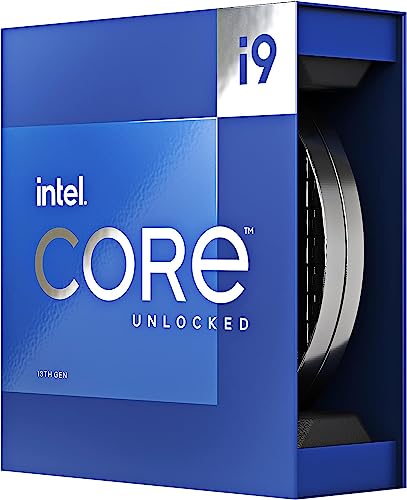 | Ultimate Powerhouse | Core Count: 24 cores | Threads: 32 threads | Boost Clock Speed: Up to 5.8 GHz | VIEW ON AMAZON | Read Our Analysis |
More Details on Our Top Picks
AMD Ryzen 7 – 7800X3D
The AMD Ryzen 7 7800X3D is a powerhouse for gamers and creators alike, boasting a lightning-fast speed of up to 5.0 GHz! With 8 cores and 16 threads, this processor delivers smooth performance for multitasking and gaming marathons.
Its 96MB L3 cache means quicker data access, making lag a thing of the past. Plus, it’s built on a sleek 5nm process, keeping things cool and efficient. Whether you’re gaming or creating, the 7800X3D is your trusty sidekick, ready to tackle any digital adventure with flair!
- Core Count:8 cores
- Threads:16 threads
- Boost Clock Speed:Up to 5.0 GHz
- Cache Size:96MB L3 + 104MB secondary cache
- Socket Type:AM5
- Integrated Graphics:Not available
- Additional Feature:8 cores, 16 threads
- Additional Feature:5nm process technology
- Additional Feature:120W thermal design power
Intel Core i9-13900K Desktop Processor (24 Cores)
For gamers and content creators who crave top-tier performance, the Intel Core i9-13900K is a powerhouse that doesn’t disappoint. With 24 cores—8 performance and 16 efficiency—this beast can handle anything thrown its way, reaching speeds up to 5.8 GHz.
Imagine streaming your favorite game while rendering a video, all without a hitch! Plus, it comes with Intel UHD Graphics 770, so you won’t need a separate graphics card for basic tasks.
Just remember, it’s best paired with Intel 600 or 700 series motherboards, and a BIOS update might be required. Ready to elevate your game? Let’s go!
- Core Count:24 cores
- Threads:32 threads
- Boost Clock Speed:Up to 5.8 GHz
- Cache Size:36MB Cache
- Socket Type:Intel 600/700 series
- Integrated Graphics:Intel UHD Graphics 770
- Additional Feature:24 cores total
- Additional Feature:5.8 GHz max speed
- Additional Feature:Integrated UHD Graphics 770
Factors to Consider When Choosing CPUs in 2023
Choosing a CPU in 2023 can feel like picking a favorite snack, so many options and flavors! Factors like performance metrics, core counts, and compatibility with motherboards are essential for ensuring the best fit for your needs.
Plus, understanding things like architecture and clock speeds can make all the difference, so let’s break it down together!
Performance Metrics Importance
When diving into the world of CPUs in 2023, performance metrics hold the key to revealing your computer’s true potential. Think of clock speeds and core counts as the horsepower of your machine. Higher clock speeds, like 5.8 GHz, and more cores, say 24, make multitasking a breeze.
Then there’s cache size. A larger cache, like 96MB L3, speeds up data access, making everything snappier. Don’t forget about Thermal Design Power (TDP)—a 120W TDP means your CPU needs good cooling to avoid overheating.
And the architecture? Designs like Zen 4 can boost efficiency for specific tasks. Finally, ensuring your CPU supports DDR5 memory lets you tap into lightning-fast speeds for data-heavy applications. Happy computing!
Core and Thread Count
Imagine a bustling kitchen, chefs working in harmony to whip up delicious meals. In the world of CPUs, core and thread counts are like those chefs. The more cores a CPU has, the better it can multitask, just like having more chefs means more dishes can be prepped simultaneously.
If you spot a CPU with 16 threads or more, it’s like finding a kitchen with extra hands—perfect for video editing or gaming marathons! High-performance CPUs might boast up to 24 cores, tackling heavy tasks effortlessly.
Hybrid designs, mixing performance and efficiency cores, are like having chefs who know when to hustle and when to chill. When choosing a CPU, keep these counts in mind; they’re key to a smooth, powerful experience!
Compatibility With Motherboards
In the world of CPUs, picking the right one is a bit like assembling a jigsaw puzzle. You can’t just grab any piece and hope it fits! First, make sure the CPU socket type matches your motherboard, think AM5 for AMD or LGA 1700 for Intel. Next, check the motherboard chipset; it’s like a VIP pass for your CPU.
Don’t forget to confirm it can handle the processor’s power needs, including TDP. A quick BIOS update might be necessary for newer CPUs, so peek at that version. Finally, consider memory compatibility; some CPUs love DDR5 RAM and specific speeds. Get these details right, and you’ll be on your way to a winning setup!
Architecture and Process Technology
Choosing the right CPU can feel like maneuvering through a maze, especially with all the technical terms flying around. First off, architecture matters: think AMD’s Zen 4 or Intel’s hybrid design. These choices impact everything from gaming thrills to content creation magic.
Then there’s process technology, measured in nanometers. Smaller numbers mean more transistors packed in, which can lead to lower power use and less heat—your computer will thank you!
Modern CPUs often boast multi-core designs, combining performance and efficiency cores for the ultimate multitasking. Don’t forget cache size! A larger cache, like a hefty 96MB L3, speeds things up by keeping data close at hand.
All these factors play a role in ensuring your CPU is up to the task!
Clock Speed Considerations
When it comes to clock speed, a little knowledge goes a long way! Clock speed, measured in gigahertz (GHz), tells you how many tasks a CPU can handle every second. Higher speeds usually mean better performance, especially for quick tasks.
For instance, the AMD Ryzen 7 7800X3D hits 4.2 GHz base and can boost to 5.0 GHz, making it great for various applications. Meanwhile, the Intel Core i9-13900K can soar up to 5.8 GHz, perfect for gamers and content creators.
But remember, clock speed isn’t everything! Core count and architecture also matter. Plus, keep an eye on Thermal Design Power (TDP): it tells you how much heat and power your CPU will need. Happy CPU hunting!
Integrated Graphics Features
While clock speed can boost a CPU’s performance, integrated graphics play a key role too. These handy features let you connect your display without needing a separate graphics card. Perfect for budget-friendly or compact builds, integrated graphics handle basic gaming and multimedia tasks like a charm. Some CPUs even pack a punch, allowing for casual gaming and content creation without breaking the bank.
For everyday users, this versatility is a game changer! If you don’t need high-end graphics, integrated options offer reliable display capabilities at a great price. Just remember, the performance can vary, so choosing a CPU with solid graphics is essential for a smooth experience.
Who knew saving money could feel this good?
Frequently Asked Questions
What Is the Best CPU for Gaming in 2023?
The best CPU for gaming in 2023? Many gamers are buzzing about the AMD Ryzen 7 5800X3D. It’s like the superhero of processors, super fast and great for multitasking! Plus, it doesn’t break the bank.
Intel’s Core i9-13900K is also a contender, packing a punch for high-end gaming. Whichever you choose, both will help you crush those boss battles. So, grab some snacks, power up, and enjoy the ride!
How Do I Cool My CPU Effectively?
Cooling a CPU effectively is like giving it a revitalizing drink on a hot day. First, make certain good airflow in the case—think of it as opening a window! Invest in a quality cooler, whether air or liquid, to keep temperatures down.
Don’t forget thermal paste; it’s the secret sauce for heat transfer. Finally, monitor temps with software. A cool CPU means smoother gaming, and who doesn’t want that? Stay chill!
Can I Overclock My CPU Safely?
Yes, you can overclock your CPU safely! Just think of it like giving your computer a little energy boost. Start small—increase the clock speed gradually while keeping an eye on temperatures.
Make sure you have a good cooler; nobody likes a hothead! If things get too toasty, dial it back. Remember, it’s all about balance. With a bit of patience, you might just reveal some extra performance without melting anything down!
What Is the Lifespan of a Modern CPU?
A modern CPU can last anywhere from 5 to 10 years, depending on usage and care. It’s like a trusty old car: if you keep it clean and don’t push it too hard, it’ll be around for a while.
Overclocking or heavy gaming can speed up aging, though! So treat your CPU well—give it some cooling love and regular updates. Who knew computer parts needed pampering too?
How Do I Know if My Motherboard Is Compatible?
To check if a motherboard is compatible, one must first identify the CPU socket type. It’s like finding the right key for a lock!
Next, consult the motherboard’s manual or website for supported processors. Also, consider the chipset; it’s the secret sauce that helps everything work together.
Finally, don’t forget about power requirements and BIOS updates. With these steps, compatibility becomes a breeze, and no tech-savvy wizardry is needed!