


The sweat is already pooling on your forehead before you finish parking the van at the desert campsite. You need reliable power to keep your fridge humming so the groceries don't turn into a warm soup by midday.
Finding the Best Solar Panels for Hot Climates means choosing equipment that refuses to quit when the mercury climbs. High heat creates efficiency drops, so focusing on modern materials is the smartest move you can make. Here is how to find gear that actually works in the scorching sun.
Key Takeaways
- Prioritize N-type silicon cells because they offer superior thermal stability compared to older P-type technology.
- Check for a high busbar count, such as 16BB or 18BB, to minimize resistance and heat buildup within the panel.
- Seek out panels with a low temperature coefficient to ensure performance stays steady as the ambient air warms up.
- Verify the IP rating is at least IP67 or IP68 to protect sensitive connections from dust and intense summer storms.
- Consider bifacial designs if you have a reflective surface underneath, as they harvest reflected light to boost total output.
| Best Overall Compact |  |
Renogy 200 Watt N-Type Panel | Extremely compact footprint | Advanced N-type construction | Durable IP67 rating | View on Amazon | Read Review |
| High Power Titan |  |
JJN 850 Watt Bifacial Panels | Massive total output | Dual sided energy capture | Broad system compatibility | View on Amazon | Read Review |
| Reliable Large Scale |  |
SUNGOLDPOWER 500W Monocrystalline Solar Array | High total capacity | Premium Grade A cells | Superior moisture protection | View on Amazon | Read Review |
| Versatile Bifacial Efficiency |  |
JJN 425 Watt Bifacial Module | High efficiency rating | Rear side energy gain | Strong build quality | View on Amazon | Read Review |
| Robust Heat Resister |  |
400W N-Type Monocrystalline Set | High busbar count | Excellent heat resistance | Fully waterproof construction | View on Amazon | Read Review |
| Certified Quality Choice | 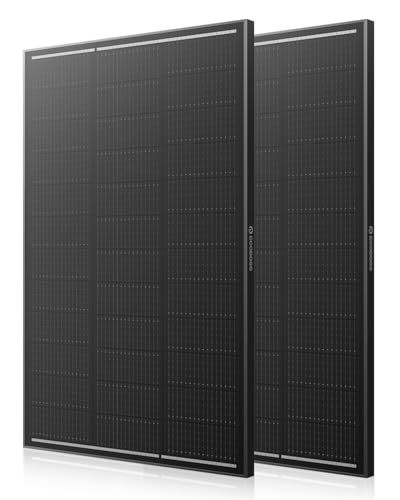 |
200W TÜV Certified Panels | TÜV safety certified | Compact module size | Efficient energy conversion | View on Amazon | Read Review |
| Best Portable Convenience |  |
Renogy 200W Foldable Panel | Integrated kickstand | Direct device charging | Highly portable folding design | View on Amazon | Read Review |
| Traveler Fast Charger | 100W Portable USB-C Panel | Fast USB-C charging | Lightweight and foldable | Long connection cable | View on Amazon | Read Review | |
| Shade Tolerant Specialist |  |
400W Bifacial Parallel Array | Shade mitigation technology | Dual module parallel design | High efficiency output | View on Amazon | Read Review |
| Small Space Specialist | 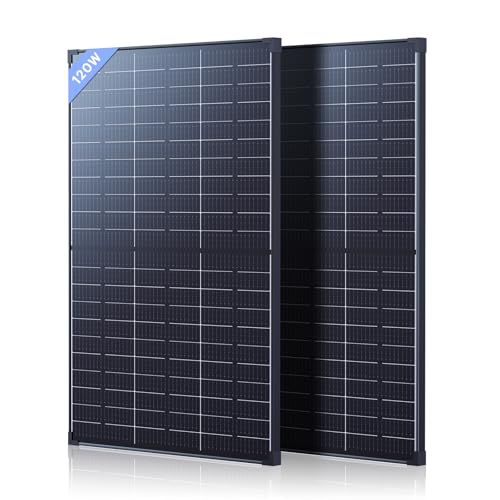 |
240W Bifacial Anti-Shade Panels | Compact bifacial design | Shade resistant layout | High efficiency modules | View on Amazon | Read Review |
More Details on Our Top Picks
-
Renogy 200 Watt N-Type Panel
This panel is a fantastic choice for those who need to squeeze high efficiency into a tight footprint on a van or boat. Because it uses N-type technology, it resists degradation better than older designs when the environment gets scorching.
You will appreciate the space-saving design that keeps your roof clutter-free while maintaining a solid power output. Just keep in mind that at 200 watts, it serves as a great foundation but might require pairing with others for larger energy demands.
- Brand Name:Renogy
- Panel Capacity:200 Watt
- Cell Technology:N-Type
- Busbar Count:16BB
- Protection Rating:IP67
- Additional Feature:Lightweight frame design
- Additional Feature:Space saving profile
- Additional Feature:Marine grade build
-
JJN 850 Watt Bifacial Panels
If you have the room, these panels are like a solar powerhouse for your homestead or large charging station. The bifacial design allows them to capture sunlight from both the front and the reflected light hitting the back, which is a clever way to boost total yield.
They handle the 12V to 48V range with ease, making them versatile for almost any system architecture. These are quite large, so ensure your mounting surface can handle the significant surface area and weight.
- Brand Name:JJN
- Panel Capacity:850 Watt
- Cell Technology:N-Type Monocrystalline
- Busbar Count:16BB
- Module Count:2
- Additional Feature:On-grid and off-grid capable
- Additional Feature:Bifacial energy harvesting
- Additional Feature:Versatile voltage output
-
SUNGOLDPOWER 500W Monocrystalline Solar Array
This collection of ten panels provides a massive 5000W output, making it the go-to for anyone running an entire tiny house or cabin off the grid. Using Grade A cells ensures you get consistent quality across every single unit in the set.
The IP68 waterproof rating is a significant plus, offering peace of mind when the weather turns unpredictable. Be prepared to dedicate a full day to installation, as managing ten panels requires a bit of logistical planning.
- Brand Name:SUNGOLDPOWER
- Panel Capacity:5000 Watt
- Cell Technology:Monocrystalline
- Protection Rating:IP68
- Module Count:10
- Additional Feature:Weatherproof housing
- Additional Feature:Suitable for household systems
- Additional Feature:On and off grid use
-
JJN 425 Watt Bifacial Module
This single-panel option offers a great middle ground for those who want the bifacial advantage without the massive footprint of a dual-panel kit. It utilizes 16 busbars to keep electrical resistance low, which helps the panel stay cooler during high-heat operations.
It is an excellent fit for rooftop or farm installations where you want to maximize every square inch of sunlight. Like most bifacial units, you will get the best results if you mount these over a reflective surface to catch that rear-side gain.
- Brand Name:JJN
- Panel Capacity:425 Watt
- Cell Technology:N-Type Monocrystalline
- Busbar Count:16BB
- Additional Feature:High efficiency solar module
- Additional Feature:Suitable for 12V 48V systems
- Additional Feature:Durable frame construction
-
400W N-Type Monocrystalline Set
This 400-watt pair is a workhorse for RV and marine setups where heat degradation is a constant concern. By using 18 busbars, these panels manage current flow effectively, reducing heat buildup even under the intense midday sun.
The IP68 rating confirms they are well-sealed against the elements, preventing common issues like moisture ingress. You will need to account for the physical size of the two panels when planning your layout.
- Brand Name:Generic
- Panel Capacity:400 Watt
- Cell Technology:N-Type Monocrystalline
- Busbar Count:18BB
- Protection Rating:IP68
- Module Count:2
- Additional Feature:Off-grid system ready
- Additional Feature:Optimized for hot climates
- Additional Feature:Durable mounting points
-
200W TÜV Certified Panels
Having TÜV certification gives you a bit of extra confidence that these panels meet rigorous safety and performance standards. These 100-watt modules are small enough to be highly portable yet efficient enough to keep your batteries topped off.
They are an ideal pick for 12V off-grid systems like small trailers or backup power stations. Because they come as a pair, you can easily wire them in series or parallel depending on your specific charge controller requirements.
- Brand Name:Generic
- Panel Capacity:200 Watt
- Cell Technology:N-Type Monocrystalline
- Busbar Count:16BB
- Protection Rating:IP68
- Module Count:2
- Additional Feature:Easy 12V system integration
- Additional Feature:Backup power capable
- Additional Feature:Lightweight construction
-
Renogy 200W Foldable Panel
If your adventures involve a lot of moving around, this foldable design is a dream. It includes a built-in kickstand, which acts like a tripod for your solar array, allowing you to angle it directly toward the sun for maximum gain.
The inclusion of USB-A and Type-C outputs makes it incredibly handy for charging devices directly without needing a separate power station. It is a bit more delicate than a rigid rooftop panel, so handle it with reasonable care.
- Brand Name:Renogy
- Panel Capacity:200 Watt
- Cell Technology:N-Type
- Protection Rating:IP65
- Additional Feature:Lightweight folding frame
- Additional Feature:Built in USB ports
- Additional Feature:Power station compatible
-
100W Portable USB-C Panel
This 100-watt portable unit focuses on fast charging capabilities for your modern gadgets. Using CPC material, it balances durability with a weight that won't hold you back when you are hiking to a campsite.
It comes with a 3-meter cable, giving you the flexibility to place the panel in the sun while you keep your gear in the shade. It is specifically designed for small power stations and mobile devices rather than powering a whole vehicle.
- Brand Name:Generic
- Panel Capacity:100 Watt
- Protection Rating:IP65
- Additional Feature:PD3.0 charging standard
- Additional Feature:XT60 connector support
- Additional Feature:Weather resistant material
-
400W Bifacial Parallel Array
The standout feature here is the anti-shade design, which is a lifesaver if your roof setup has occasional obstacles like vents or trees. This dual-module system uses 16 busbars to ensure that one shaded cell does not drag down the performance of the entire array.
It is a great choice for van and home installations where clean, unobstructed light is not always guaranteed. You get the benefit of bifacial technology, so make sure to leave a little space between the panel and the mounting surface to allow for rear-side light.
- Brand Name:Generic
- Panel Capacity:400 Watt
- Cell Technology:N-Type Monocrystalline
- Busbar Count:16BB
- Module Count:2
- Additional Feature:Bifacial energy capture
- Additional Feature:Suitable for 24V systems
- Additional Feature:Off-grid ready
-
240W Bifacial Anti-Shade Panels
These 240-watt bifacial panels are built for those who need high performance in a small footprint. The 30 percent extra output from the rear side is a significant boost that helps offset the lower wattage rating.
The anti-shade technology ensures your system keeps working even when conditions are less than perfect. It is a fantastic option for compact RV rooftops where every watt counts.
- Brand Name:Generic
- Panel Capacity:240 Watt
- Cell Technology:N-Type Monocrystalline
- Busbar Count:16BB
- Module Count:2
- Additional Feature:Dual sided power output
- Additional Feature:12V system compatible
- Additional Feature:Optimized for small roofs
Frequently Asked Questions
Why does heat make solar panels produce less electricity?
Solar panels rely on the photovoltaic effect, which works best when electrons are excited by light but not overwhelmed by thermal chaos. High temperatures increase the internal resistance of the cells, which acts like a bottleneck for your electricity flow. Think of it like trying to run through a crowd: the hotter it gets, the more crowded and difficult the path becomes for your current.
What is the ideal temperature for a solar panel?
Panels are officially rated at 77 degrees Fahrenheit, or 25 degrees Celsius. They operate at their peak efficiency at this temperature. Once the ambient temperature climbs higher, or the panels absorb enough heat to get even hotter, you will notice a gradual dip in your daily power production.
Do solar panels break if they get too hot?
Quality panels are designed to handle extreme desert heat without cracking or melting. They use specialized encapsulants and thermal-resistant materials to prevent damage during the hottest months. As long as you choose a reputable brand with a good temperature rating, you should not worry about the sun destroying the panels themselves.
How does humidity affect solar performance in hot climates?
Humidity can actually be more of a nuisance than heat alone. High moisture levels in the air scatter sunlight, which reduces the direct light intensity reaching your panels. Additionally, if the humidity leads to heavy cloud cover or haze, your total energy yield for the day will likely decrease.
Should I install panels with a gap for airflow?
Yes, leaving a gap between your roof and the panels is essential for natural convection. This gap allows air to circulate underneath, which carries away trapped heat and helps keep the cells cooler. A mounting system that provides at least four to six inches of clearance can significantly improve your system performance in the heat.