


How do you make your voice stand out in a dry room without sounding like you are singing from the bottom of a well? Achieving that professional polish requires the right touch of space and depth.
Choosing the Best Reverbs for Vocals depends on how much control you need during a performance. Let these selections guide you toward the right signal processor for your setup.
Key Takeaways
- Prioritize units that offer dedicated microphone inputs to ensure proper impedance matching with your vocal gear.
- Look for adjustable decay and mix knobs so you can dial in the wet signal without muddying your core performance.
- Consider whether you need a simple reverb box or an all-in-one processor that handles harmonies and pitch correction.
- Choose a pedal with a metal chassis if you intend to move it between rehearsal spaces or gig venues frequently.
- Check if your chosen unit includes built-in memory slots to store your specific sound settings for fast recall during a set.
| Ultimate Vocal Ambience |  |
Boss VE-1 Vocal Echo | Seven vocal-specific reverb modes | Real-time sound control | Built-in memory for presets | View on Amazon | Read Review |
| Versatile Doubling Tool |  |
Flamma FV02 Vocal Processor | Built-in vocal doubling | Independent reverb controls | Compact footprint | View on Amazon | Read Review |
| Studio Quality Simplicity |  |
TC Helicon VoiceTone R1 | Transparent studio-grade reverb | Rugged metal construction | Simple one-button operation | View on Amazon | Read Review |
| Intelligent Harmony Expert |  |
Boss VE-2 Vocal Harmonist | Real-time harmony generation | High quality reverb included | Guitar input for tracking | View on Amazon | Read Review |
| Complete Vocal Suite |  |
HeadRush VX5 Auto-Tune Pedal | Antares Auto-Tune integration | Extensive vocal effects | Audio interface capabilities | View on Amazon | Read Review |
| Budget Experimental Choice |  |
Verb Square Digital Reverb | Nine versatile reverb modes | Extremely compact size | True bypass switching | View on Amazon | Read Review |
| Industry Standard Reverb |  |
Boss RV-6 Reverb Pedal | Exceptional sound clarity | Versatile Shimmer mode | Reliable Boss construction | View on Amazon | Read Review |
| Best Space Saver |  |
Sonicake Delay Reverb Combo | Two-in-one compact design | Warm, musical tone | Simple layout | View on Amazon | Read Review |
| Affordable Tone Sculptor |  |
Donner Verb Square Pedal | Seven distinct modes | Very affordable | Solid build quality | View on Amazon | Read Review |
| Creative Texture Generator | 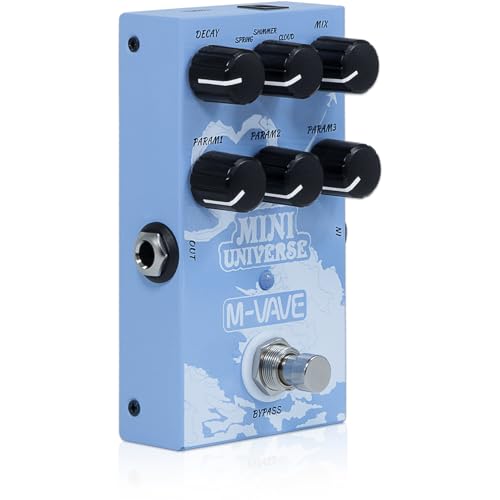 |
M-Vave Mini Universe Pro | Nine creative reverb modes | Compact metal housing | Dual power supply options | View on Amazon | Read Review |
More Details on Our Top Picks
-
Boss VE-1 Vocal Echo
If you want to make your live singing sound like a polished studio recording, this is your go-to device. It provides seven distinct reverb types that range from subtle room echoes to lush, deep soundscapes.
The dedicated buttons allow you to dial in your preference without deep-diving into menus. Just keep in mind that it is specifically tuned for voices, so you will not find the experimental guitar-focused textures present in multi-effect units.
- Brand Name:Boss
- Effect Types:Echo, Room, Hall, Plate
- Power Source:Battery or AC adapter
- Housing Material:Metal
- Primary Input:XLR microphone
- Control Interface:Dedicated physical knobs
- Additional Feature:Enhanced button for instant richness
- Additional Feature:Pitch correct functionality included
- Additional Feature:Battery operation for mobile use
-
Flamma FV02 Vocal Processor
This pedal is a smart choice for singers who want more than just standard reverb. It combines vocal doubling with classic effects, which adds a thicker, more professional texture to your solo performances.
The interface is simple enough to use on stage, though the reliance on a single footswitch means you need to be intentional about your preset switching. It acts as a great all-in-one companion for a solo acoustic act.
- Brand Name:Flamma
- Effect Types:Reverb, Chorus, Delay
- Power Source:AC adapter
- Primary Input:XLR microphone
- Control Interface:Footswitch and knobs
- Additional Feature:Tone adjustment modes
- Additional Feature:Microphone amplification
- Additional Feature:Parallel processing support
-
TC Helicon VoiceTone R1
Sometimes you just need a clean, professional sound without the headache of complicated signal chains. This unit focuses entirely on delivering high-end reverb that sounds like it came straight from a mixing console.
It sits comfortably in your signal path and gives you exactly what you expect from the name. The trade-off is the lack of variety, as it is a single-purpose tool rather than a playground for sound design.
- Brand Name:TC Helicon
- Effect Types:Room, Hall, Plate
- Power Source:AC adapter
- Housing Material:Metal
- Primary Input:XLR microphone
- Control Interface:Single dry/wet knob
- Additional Feature:Mic control remote capability
- Additional Feature:Low noise signal path
- Additional Feature:Compact pedalboard profile
-
Boss VE-2 Vocal Harmonist
If your goal is to create a full sound even when you are the only one on stage, this unit is a powerhouse. It listens to your guitar chords to generate accurate vocal harmonies while providing professional-grade reverb to glue the sound together.
It is a bit more complex than a standard reverb box, so take some time to learn how the key detection works. Once you have it dialed in, it feels like having a backup singer in your pedalboard.
- Brand Name:Boss
- Effect Types:Harmony, Reverb, Echo
- Power Source:Battery or AC adapter
- Primary Input:XLR microphone and guitar
- Control Interface:Dual foot pedal
- Additional Feature:Hybrid battery or power supply
- Additional Feature:Phantom power for condensers
- Additional Feature:Memory for user presets
-
HeadRush VX5 Auto-Tune Pedal
This unit is essentially a full vocal workstation in a single box. It handles everything from real-time pitch correction to complex harmonies, making it a favorite for vocalists who want to control their entire sound chain.
Because it does so much, the learning curve is steeper than a simple reverb pedal. If you are serious about refining your voice with modern production techniques, this investment is worth the effort.
- Brand Name:HeadRush
- Effect Types:Reverb, Harmony, Pitch Correction
- Power Source:AC adapter
- Primary Input:XLR and 1/4 inch
- Control Interface:Touchscreen and knobs
- Additional Feature:Real-time pitch correction
- Additional Feature:Built-in audio interface
- Additional Feature:Extensive harmony engine
-
Verb Square Digital Reverb
If you are looking for a wide variety of sounds without breaking the bank, this compact unit offers nine different modes. It is essentially a Swiss Army knife for atmospheric vocal textures, including lofi and ducking options.
It is designed with guitarists in mind, so you will need an impedance-matching transformer to use it effectively with a standard vocal microphone. It is a fun, creative tool for someone who enjoys shaping their sound.
- Brand Name:Verb Square
- Effect Types:Hall, Plate, Spring, Lo-Fi
- Power Source:AC adapter
- Housing Material:Aluminum alloy
- Control Interface:Rotary mode selector
- Additional Feature:True bypass circuitry
- Additional Feature:Small footprint for boards
- Additional Feature:Rugged metal casing
-
Boss RV-6 Reverb Pedal
This pedal is a staple for a reason, as it delivers high-fidelity sound that works beautifully on anything from guitars to vocals. The shimmer mode adds a magical, ethereal quality to sustained notes that is hard to replicate elsewhere.
It is built like a tank, ensuring it can handle years of performance. Just remember that it is a line-level instrument pedal, so be careful with your gain staging when plugging a microphone into it.
- Brand Name:Boss
- Effect Types:Room, Hall, Plate, Shimmer
- Power Source:Battery or AC adapter
- Housing Material:Metal
- Control Interface:Multi-knob layout
- Additional Feature:High-quality digital processing
- Additional Feature:Stereo output capability
- Additional Feature:Simple, intuitive control scheme
-
Sonicake Delay Reverb Combo
Combining delay and reverb into one chassis is a brilliant way to save space on a crowded pedalboard. This pedal provides a lush ambient sound that helps fill out thin vocal lines without the need for two separate units.
It leans toward a warmer, darker sound profile, which is great for smoothing out sharp vocal transients. Keep in mind that you cannot separate the two effects, so they are always linked in your signal chain.
- Brand Name:Sonicake
- Effect Types:Delay and Reverb
- Power Source:AC adapter
- Housing Material:Metal
- Control Interface:Three-knob adjustment
- Additional Feature:Levitate effect for trails
- Additional Feature:Compact form factor
- Additional Feature:Dual function switching
-
Donner Verb Square Pedal
This pedal gives you a solid selection of classic spaces to make your voice sound larger than life. The church and spring modes stand out for their depth and character, providing a nice contrast to the cleaner studio settings.
The housing is quite small, which is perfect for crowded setups. As with other guitar pedals, ensure you have a pre-amp or mixer channel to handle the signal level if you intend to run a microphone through it.
- Brand Name:Donner
- Effect Types:Room, Hall, Church, Spring
- Power Source:AC adapter
- Housing Material:Metal
- Control Interface:Rotary mode selector
- Additional Feature:True bypass design
- Additional Feature:Compact pedalboard size
- Additional Feature:Versatile tonal options
-
M-Vave Mini Universe Pro
If you want to experiment with modern, expansive sounds like bloom or swell, this is a fantastic entry point. It offers a massive range of textures that can turn a dry vocal into a cinematic soundscape.
The dual power options make it very easy to integrate into any existing rig. It is a bit more specialized than a standard hall reverb, so it serves best as an additional color in your vocal palette.
- Brand Name:M-Vave
- Effect Types:Shimmer, Bloom, Swell, Lo-Fi
- Power Source:AC adapter or USB
- Housing Material:Metal
- Control Interface:Rotary knobs
- Additional Feature:True bypass switching
- Additional Feature:Sleek modern design
- Additional Feature:Wide variety of effects
Frequently Asked Questions
Should I put reverb directly on the vocal track or use a bus?
You should almost always use a reverb bus or auxiliary track for vocals. This lets you apply the effect to multiple vocal layers at once, ensuring the cohesion of your sound across the entire project. Using a bus also gives you a dedicated fader to balance the wet signal against the dry vocal. It keeps your project organized and prevents your CPU from working overtime on redundant processing.
How much reverb is too much?
If you can clearly distinguish the reverb as a separate sound, you likely have the wet-dry mix turned up too high. The goal is usually to create a sense of space that feels like part of the voice rather than a layer on top. Try pulling the fader down until the reverb disappears, then slowly increase it until you just barely notice the added depth. This subtle touch is often the secret to a professional-sounding vocal.
What is the difference between plate and hall reverb?
Plate reverb is bright and dense, which makes it perfect for cutting through a mix in genres like pop or R&B. It mimics the sound of vibrating metal sheets and feels very immediate. Hall reverb sounds expansive and mimics the natural decay of a large concert venue. Use this when you want a vocal to sound cinematic, ethereal, or distant.
Can I use one reverb plugin for all my vocals?
You can certainly use one plugin, but you should rarely use the exact same settings for every voice. Different singers have different timbral characteristics that require unique adjustments to EQ and decay. Creating a custom reverb preset for each lead vocal ensures the processing complements the specific frequency profile of the performance. Consistency is good, but tailored settings will always sound more intentional.
Do I need to EQ my reverb?
Absolutely, because unprocessed reverb often carries unwanted low-mid resonance that creates mud. Use a high-pass filter on your reverb bus to remove frequencies below 200Hz for a tighter, cleaner result. Cutting a bit of the harsh high-end can also prevent the reverb from competing with your cymbals or synths. Treating your reverb like a separate instrument that needs its own space is a hallmark of an experienced mixer.