

You might assume that passing boards requires nothing more than highlighters and sheer willpower. However, the most successful clinicians often rely on a curated library of specific tools to bridge the gap between classroom theory and clinical reality.
Finding the Best Ot Programs and study companions is less about collecting every resource and more about finding what aligns with your cognitive style. Let us sort through these materials so you can focus on mastering the material.
Key Takeaways
- Prioritize updated editions that align with the most recent version of the official professional framework.
- Choose physical flashcards if you struggle with screen fatigue or need to memorize terminology away from your desk.
- Ensure your primary study guide includes detailed answer explanations to help you understand the logic behind correct responses.
- Invest in compact pocket guides that allow for quick reference during your field rotations.
- Select practice question banks that offer a volume of at least several hundred items to build your endurance for long exams.
| Top Exam Companion |  |
OT Exam Prepper Study Guide | Organized study material | Focused content delivery | Clear learning path | View on Amazon | Read Review |
| Essential Field Tool |  |
OT Reference Pocket Guide | Extremely portable size | Quick clinical data | Perfect for rotations | View on Amazon | Read Review |
| Comprehensive Knowledge Bank |  |
Occupational Therapy Examination Review Guide | Extensive subject coverage | Academic depth | Structured review format | View on Amazon | Read Review |
| Specialized Clinical Tool |  |
OT-DORA Driver Assessment Battery | Standardized assessment metrics | Clear clinical utility | Objective scoring criteria | View on Amazon | Read Review |
| Practice Question Powerhouse |  |
NBCOT-COTA Exam Prep 2026-2027 | High volume of questions | Detailed answer rationales | Recent content updates | View on Amazon | Read Review |
| Stylish Clinical Journal |  |
Occupational Therapy Spiral Notebook | Lays flat easily | Practical size | Sturdy spiral binding | View on Amazon | Read Review |
| Active Recall Expert |  |
OT Exam Flashcard Study System | Portable study system | Efficient memorization tool | High-frequency term focus | View on Amazon | Read Review |
| Rapid Clinical Resource |  |
Quick Reference to Occupational Therapy | Intuitive organization | Actionable clinical advice | Time-saving layout | View on Amazon | Read Review |
| Trusted Exam Staple |  |
National OT Certification Review Guide | Broad topic coverage | Reliable historical content | Long-standing reputation | View on Amazon | Read Review |
| Foundational Professional Document | 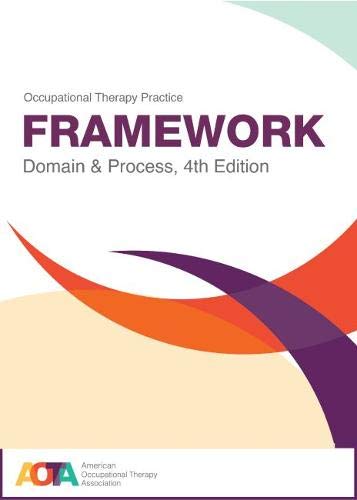 |
OT Practice Framework 4th Edition | Essential industry standard | Clear domain definitions | Official professional framework | View on Amazon | Read Review |
More Details on Our Top Picks
-
OT Exam Prepper Study Guide
If you are currently preparing for the national board board requirements, this resource acts as your primary roadmap. It focuses heavily on foundational concepts that appear consistently across the board. You will find that the structure helps organize complex medical information into manageable chunks.
This guide is best for students who appreciate a direct approach to curriculum review. It strips away the fluff, focusing instead on high-yield topics. Just keep in mind that you might need a secondary source for deeper clinical illustrations.
- Product Type:Exam prep guide
- Target Exam:NBCOT
- Additional Feature:Strategic subject breakdown
- Additional Feature:Core competency focus
- Additional Feature:Easy to reference
-
OT Reference Pocket Guide
Think of this as a miniature cheat sheet that fits right in your scrub pocket. It is perfect for clinical rotations when you need to recall a specific intervention or safety protocol in a split second. The small size makes it a reliable companion during a busy shift.
It offers quick access to essential data without the bulk of a textbook. While it is incredibly convenient, do not expect to find exhaustive details on complex pathology here. It is meant for rapid retrieval, not in-depth research.
- Format:Pocket sized guide
- Page Count:32 pages
- Dimensions:3 x 5 inches
- Additional Feature:Durable construction
- Additional Feature:Quick intervention tips
- Additional Feature:Compact design
-
Occupational Therapy Examination Review Guide
This guide serves as a rigorous academic baseline for your certification journey. It covers the breadth of the field with enough detail to satisfy even the most thorough studiers. You can expect a deep dive into the domains of practice that define the profession.
It is ideal for those who prefer structured learning and systematic review modules. The density of the information can feel a bit overwhelming, so plan to spread your reading out over several weeks. It is definitely not a light evening read.
- Product Type:Review guide
- Target Exam:NBCOT
- Additional Feature:Detailed domain explanations
- Additional Feature:Systematic content review
- Additional Feature:Professional terminology guide
-
OT-DORA Driver Assessment Battery
This assessment battery is a must-have for therapists working in driving rehabilitation or community mobility. It provides a standardized framework for evaluating a client's ability to safely operate a vehicle. The methodology here is highly technical and specific to clinical practice.
You will find it helpful for creating objective reports based on observable data points. Since it is highly specialized, it is not something you will use every day unless your practice focuses specifically on driver rehab.
- Product Type:Assessment battery
- Format:Physical toolset
- Additional Feature:Evidence-based methodology
- Additional Feature:Clinical evaluation framework
- Additional Feature:Structured reporting forms
-
NBCOT-COTA Exam Prep 2026-2027
If you are a COTA candidate, you need a high volume of practice questions to refine your judgment. This book provides 750 items to help you build confidence before the big day. The inclusion of detailed explanations is a major plus for understanding why an answer is correct.
It is designed to mimic the actual exam experience through its logical flow and question variety. Make sure to review the rationales provided for every single answer. It is often the reasoning behind the correct choice that teaches you the most.
- Edition:2026-2027
- Target Exam:NBCOT-COTA
- Additional Feature:Complete content review
- Additional Feature:Multiple practice scenarios
- Additional Feature:Detailed explanation modules
-
Occupational Therapy Spiral Notebook
Sometimes you just need a reliable place to store your thoughts, patient notes, or lecture takeaways. This notebook offers a functional design with enough space for daily journaling. Its spiral binding allows it to lay flat, which is quite helpful when you are writing in cramped spaces.
The layout is simple, making it a great blank slate for organized note taking. While it lacks technical content, it is a sturdy tool for keeping your thoughts coherent throughout a hectic semester. It is a reliable workhorse for your desk.
- Format:Spiral notebook
- Dimensions:5.5 x 8.3 inches
- Additional Feature:Professional look
- Additional Feature:Durable cover material
- Additional Feature:Ample writing space
-
OT Exam Flashcard Study System
Flashcards are often the secret weapon for memorizing definitions and key concepts that appear on the certification exam. This system breaks down complex information into bite-sized facts. It is excellent for those moments when you have ten minutes to spare between classes or patients.
The active recall method is far more effective than just re-reading a textbook. You will find these cards especially useful for drilling high-frequency terms. Just ensure you mix them up occasionally so you do not accidentally memorize the order of the cards.
- Format:Flashcard set
- Target Exam:NBCOT OTR
- Additional Feature:Practice questions included
- Additional Feature:Review-focused design
- Additional Feature:Easy-to-carry format
-
Quick Reference to Occupational Therapy
When you are working in a clinical setting, you do not always have time to look through a five-hundred-page volume. This reference book is your go-to manual for quick lookups on protocols and best practices. It distills complex clinical situations into clear, actionable advice.
It is particularly useful for new graduates who are still building their clinical intuition. The organization is intuitive, allowing you to find what you need without flipping through endless pages. It stays relevant even as you gain more experience.
- Product Type:Reference manual
- Additional Feature:Protocol quick-lookups
- Additional Feature:Best practice summaries
- Additional Feature:Clear clinical guidance
-
National OT Certification Review Guide
This guide is a long-standing favorite for a reason, as it offers a comprehensive overview of all major exam topics. It is essentially a syllabus for the entire profession in one volume. You will find that it covers everything from pediatric developmental stages to geriatrics.
It works well for students who want a solid foundation before moving on to practice questions. The 10th edition shows that it has been refined over years of student feedback. It is a dependable text for long-term study planning.
- Edition:10th Edition
- Target Exam:NBCOT
- Additional Feature:Comprehensive topic index
- Additional Feature:Systematic review structure
- Additional Feature:Professional standard guidance
-
OT Practice Framework 4th Edition
You cannot claim to be a professional in this field without understanding the core framework that guides all practice. This edition outlines the domain and process of your work in clear, non-negotiable terms. It is the language that all occupational therapists use to describe their interventions.
Think of this document as your professional compass, as it keeps your clinical reasoning aligned with industry standards. It is not exactly light reading, but it is necessary for anyone serious about the profession. Every therapist should have a copy on their shelf for reference.
- Product Type:Professional manual
- Edition:4th Edition
- Additional Feature:Domain and process outline
- Additional Feature:Standardized terminology
- Additional Feature:Foundational practice guidance
Frequently Asked Questions
What is the primary difference between an OTD and an MOT degree?
The MOT (Master of Occupational Therapy) focuses primarily on clinical practice and gets you into the workforce faster, usually in two years. The OTD (Doctor of Occupational Therapy) includes additional coursework in leadership, research, and policy, which often takes an extra year to complete. Choose the MOT if your priority is immediate clinical entry. Select the OTD if you aspire to hold administrative roles or teach at the university level later in your career.
Do I need a specific undergraduate major to apply?
Most programs do not require a specific major, but they do mandate a set of prerequisite science courses. Common requirements include anatomy, physiology, statistics, and human development. Check the specific credit hour requirements for each school, as these can differ slightly. You can usually complete these foundational classes at a community college if your undergraduate degree did not cover them.
How long does it take to become a licensed therapist after graduation?
You must pass the NBCOT national certification exam once you receive your degree. Most states then require you to apply for state licensure to practice legally. The entire process, from finishing your final fieldwork rotation to getting your license, typically spans three to six months. Stay organized with your paperwork to avoid unnecessary delays during this transition.
Can I complete my degree while working a full-time job?
Most occupational therapy programs are highly intensive and structured like a full-time professional job. Balancing a 40-hour work week with clinical rotations and heavy coursework is rarely feasible. If you must work, look for part-time program options or weekend-based cohorts. Be honest about your capacity, as your clinical success depends on your ability to focus entirely on your studies.
What should I look for in a personal statement?
Admissions committees want to see a clear understanding of the OT profession. Explain why you are drawn to this field rather than physical therapy or nursing. Highlight your volunteer experience or observations in a clinical setting. Connecting your personal story to the core values of the profession makes your application much more memorable.