


Many musicians buy an amp simulator based solely on the number of buttons on the chassis. They end up with a complicated headache instead of the classic guitar tone they actually wanted.
You should prioritize the sound quality and signal path over the sheer quantity of presets. Finding the Best Amp Simulator Pedals requires matching your specific recording or live needs to the right technology.
Key Takeaways
- Prioritize units with dedicated impulse response loading if you demand realistic cabinet emulations.
- Choose analog circuitry if you prefer the immediate, touch-sensitive response of a real vacuum tube amplifier.
- Verify that the pedal includes an XLR output if you intend to send your signal directly into a professional mixing console.
- Consider whether you need a standalone preamp or a multi-effects unit that handles modulation and time-based processing simultaneously.
- Check the power requirements carefully, as some high-end digital models draw significantly more current than standard overdrive pedals.
| Ultimate Analog Foundation | 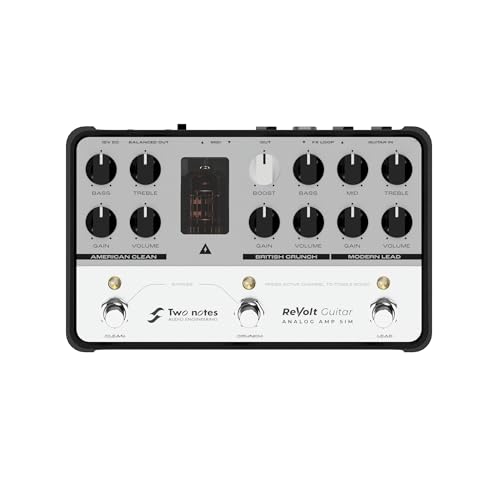 |
Two Notes ReVolt All-Analog Simulator | Real 12AX7 tube warmth | Three versatile channels | Analog signal path | View on Amazon | Read Review |
| Budget Clean Champion | 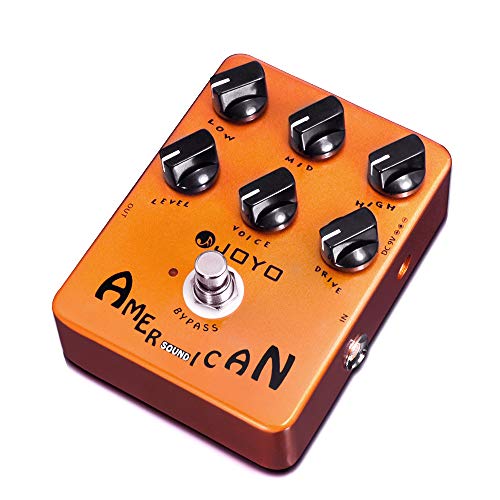 |
JOYO American Sound Tube Simulator | Exceptional value for money | Familiar Fender-inspired tones | Responsive six-knob interface | View on Amazon | Read Review |
| Compact Studio Powerhouse |  |
BOSS IR-2 Amp Cabinet Loader | Eleven high-quality amp models | Celestion Digital impulse responses | Simple physical controls | View on Amazon | Read Review |
| Simple Utility Tool |  |
Generic Analog Speaker Simulator Pedal | Pure analog signal path | No complex menus | Very portable size | View on Amazon | Read Review |
| Minimalist Practice Companion |  |
LEKATO EP-01 Amp Simulator | Intuitive control layout | Compact design saves space | Solid build quality | View on Amazon | Read Review |
| All-In-One Learner |  |
MOOER GE100 Multi-Effects Station | Includes drum machine | Built-in expression pedal | Massive effect library | View on Amazon | Read Review |
| Professional Tone Workbench |  |
BOSS IR-200 Amp Cabinet Loader | 128 user preset memories | Extremely high-fidelity audio | Comprehensive EQ shaping | View on Amazon | Read Review |
| Versatile Utility Knife | Zoom MS-80IR+ MultiStomp Modeler | Extensive amp model selection | Battery power option | Includes essential utility effects | View on Amazon | Read Review | |
| Classic American Crunch |  |
GOKKO GK-33 American Amp Simulator | Classic American tonal character | Responsive three-band EQ | Simple analog controls | View on Amazon | Read Review |
| Dual-Channel Versatility |  |
JOYO Preamp House R-15 | Nine switchable amp models | Integrated effects loop | Balanced XLR output | View on Amazon | Read Review |
More Details on Our Top Picks
-
Two Notes ReVolt All-Analog Simulator
If you want the feel of a tube amp without lugging a fifty-pound head around, this is your primary destination. It uses a real 12AX7 tube to generate authentic warmth and harmonic richness that digital emulations often miss.
This unit serves as a powerful pedalboard anchor, providing three distinct channels that cover everything from sparkling cleans to high-gain aggression. Just keep in mind that its size is substantial, so make sure your board has enough room for this substantial piece of gear.
- Brand:Two Notes
- Cabinet Simulation:Integrated analog simulation
- Connection Types:XLR, Jack, MIDI, FX Loop
- Power Requirement:12V DC
- Additional Feature:Built-in speaker simulation
- Additional Feature:MIDI control capabilities
- Additional Feature:Rugged metal chassis
-
JOYO American Sound Tube Simulator
This pedal is a classic choice for players who need a reliable "Fender-style" sound on a strict budget. It acts like a preamp and cab sim rolled into one, making it easy to plug directly into a mixer or interface for quick tracking.
The six-knob control layout allows for a surprising amount of tone sculpting. While it excels at clean and edge-of-breakup tones, you might find it struggles to maintain clarity when pushed into extreme metal territory.
- Brand:JOYO
- Connection Types:1/4 inch input and output
- Power Requirement:9V DC
- Additional Feature:Built-in cabinet emulation
- Additional Feature:Sturdy aluminum alloy housing
- Additional Feature:Low-noise circuit design
-
BOSS IR-2 Amp Cabinet Loader
This unit packs a massive amount of variety into a tiny footprint, offering 11 distinct amp types and high-quality cabinet impulses. It is an ideal companion for a travel-friendly rig that still requires professional-grade sound.
The addition of a USB-C port makes direct recording into your computer a breeze. Because the interface is so streamlined, you spend less time menu-diving and more time playing your instrument.
- Brand:BOSS
- Amp Models:11
- Connection Types:USB-C, Stereo I/O, TRS
- Power Requirement:9V DC
- Additional Feature:Headphone output for practice
- Additional Feature:Stereo reverb and ambience
- Additional Feature:Import custom IRs
-
Generic Analog Speaker Simulator Pedal
Sometimes you just need a straightforward device to bridge the gap between your pedalboard and a sound system. This all-analog circuit provides a basic speaker simulation that takes the harshness out of direct guitar signals.
It is best suited for musicians who prefer a no-nonsense approach to their signal chain. It does not offer the complex features of high-end modelers, but it fulfills the basic requirement of making your guitar sound like it is going through a cabinet.
- Brand:Generic
- Connection Types:1/4 inch I/O
- Power Requirement:9V DC
- Additional Feature:Compact footprint
- Additional Feature:Durable metal casing
- Additional Feature:True bypass switching
-
LEKATO EP-01 Amp Simulator
This unit is designed for the player who needs to move from pristine cleans to gritty overdrive without any fuss. It performs well as a basic tonal shaper for home setups or as an emergency backup.
You will appreciate the true bypass switching that ensures your signal remains untouched when the effect is off. If you are looking for a highly complex digital menu, however, you should look elsewhere as this is strictly a plug-and-play device.
- Brand:LEKATO
- Connection Types:1/4 inch I/O
- Power Requirement:9V DC
- Additional Feature:LED status indicator
- Additional Feature:True bypass
- Additional Feature:Lightweight construction
-
MOOER GE100 Multi-Effects Station
Think of this as a complete guitar workstation rather than just an amp sim. It includes a massive variety of effects, drum patterns, and even a looper to keep your practice sessions engaging.
It is particularly useful for beginners who want to explore different sounds without buying individual pedals. The integrated expression pedal adds a layer of control that you simply cannot find on standard amp-in-a-box units.
- Brand:MOOER
- Amp Models:10+ (various simulations)
- Preset Capacity:80
- Power Requirement:9V DC
- Additional Feature:180-second loop station
- Additional Feature:Built-in tuner
- Additional Feature:Headphone output
-
BOSS IR-200 Amp Cabinet Loader
This is the big brother of the smaller BOSS units, offering deep sound shaping and a massive library of 128 user memories. It functions as a complete digital center for your professional gigging rig.
The high-fidelity audio quality ensures that every nuance of your playing comes through the house speakers with clarity. It is a sophisticated piece of equipment that rewards those who take the time to dial in specific settings.
- Brand:BOSS
- Connection Types:USB, MIDI, XLR, Stereo
- Preset Capacity:128
- Power Requirement:9V DC
- Additional Feature:Built-in graphic equalizer
- Additional Feature:Stereo effects loop
- Additional Feature:Custom IR loading
-
Zoom MS-80IR+ MultiStomp Modeler
This pedal is a marvel of efficiency, squeezing 23 distinct amp models into a chassis no larger than a standard stompbox. It is perfect for the player who needs to switch between radically different sounds during a set.
Beyond the amp models, it includes useful tools like noise gates and delay effects to polish your tone. You can even run it on batteries, making it the king of the portable gigging crowd.
- Brand:Zoom
- Amp Models:23
- Connection Types:Stereo I/O, USB-C
- Power Requirement:9V DC or Batteries
- Additional Feature:Integrated noise gate
- Additional Feature:Built-in chromatic tuner
- Additional Feature:Headphone output
-
GOKKO GK-33 American Amp Simulator
This pedal mimics the sound of iconic American-style tube amps that defined the rock and roll era. It is essentially a bridge between your board and a recording interface, providing that specific "edge-of-breakup" chime.
The three-band EQ gives you the flexibility to adjust your tone to fit different rooms. While it is excellent for clean to overdrive sounds, it does not offer the high-gain saturation required for heavier genres.
- Brand:GOKKO
- Connection Types:1/4 inch input/output
- Power Requirement:9V DC
- Additional Feature:Dedicated voice control
- Additional Feature:Rugged metal chassis
- Additional Feature:Low power consumption
-
JOYO Preamp House R-15
This pedal provides a wide range of tones thanks to its nine distinct amp models and dual-channel architecture. It acts like a real amplifier head trapped in a pedal box, complete with an effects loop for your modulation pedals.
Having an XLR output is a major benefit for live performers who want to send their signal directly to the front-of-house mixer. It essentially eliminates the need for a physical amplifier at smaller venues.
- Brand:JOYO
- Amp Models:9
- Cabinet Simulation:IR-based
- Connection Types:XLR, 1/4 inch, FX Loop
- Power Requirement:9V DC
- Additional Feature:Dual-channel switching
- Additional Feature:Cabinet simulation software support
- Additional Feature:Intuitive channel layout
Frequently Asked Questions
Do I still need an amplifier if I use one of these pedals?
You generally do not need a traditional physical amplifier when using these pedals. They are designed to replace the preamp and power amp stages, sending a signal that is ready for a PA system or a recording interface. If you prefer the feel of a real speaker pushing air, you can use these as an overdrive or preamp pedal into an existing amplifier. Simply disable the cabinet simulation to avoid double-processing your sound.
Can I plug these pedals directly into my computer?
Yes, many high-quality units function as a USB audio interface. This allows you to record your guitar directly into a digital audio workstation without needing any extra hardware. Some pedals offer low-latency monitoring, which is essential for feeling connected to your instrument while playing. Just make sure your computer recognizes the pedal as an input device in your sound settings.
Will these pedals sound good with my existing guitar pedals?
Most amp simulators are designed to accept pedals just like a real tube amp would. You can place your boost, fuzz, and distortion pedals in front of the unit to shape the core tone. If you have modulation or delay pedals, you might want to place them after the simulator or in an external loop. This arrangement keeps your ambient effects clean and prevents them from being distorted by the simulated gain.
What is an impulse response and why does it matter?
An impulse response is a mathematical snapshot of a specific speaker cabinet and microphone combination. It captures the unique frequency response and sonic character of a physical rig in a specific room. Without a quality IR, your guitar signal would sound thin, harsh, and overly electric. These files provide the warmth and depth that make a digital signal feel like a classic, moving air experience.
How do I handle volume levels when playing live?
Balancing your volume is critical because digital levels can easily clip the input of a mixing board. Use the master output volume knob on the pedal to keep your signal within a safe range, typically around unity gain relative to your other effects. Always communicate with your sound engineer to ensure your signal is not too hot. Providing a balanced XLR signal helps eliminate ground loops and keeps your tone consistent from the front of the house to the monitors.