

Many photographers think a high price tag guarantees a flattering portrait. They pour their budget into a massive zoom lens, only to find the results feel clinical and detached.
Choosing one of the Best Lenses for Portrait Photography is about finding a tool that makes your subject feel present. You need a piece of glass that handles light with grace. Let us compare the options that actually deserve a spot in your bag.
Key Takeaways
- Prioritize a wider maximum aperture like f/1.8 or f/2.8 to achieve the soft background blur that separates your subject from the scene.
- Consider your camera's sensor size because an 85mm focal length on a full-frame body often provides a more flattering compression for faces than a 50mm.
- Weight matters for long sessions, so choose a compact prime lens if you want to avoid wrist fatigue during lengthy portrait shoots.
- Confirm your lens mount compatibility before purchase to avoid the frustration of using an adapter that adds unnecessary bulk.
- Optical image stabilization helps you shoot at slower shutter speeds in dim lighting, which keeps your portraits sharp without a tripod.
| The Essential Prime |  |
Canon EF 50mm f/1.8 STM | Extremely compact build | Bright f/1.8 aperture | Excellent sharpness | View on Amazon | Read Review |
| Mirrorless Standard Choice |  |
Canon RF 50mm f/1.8 STM | Ultra-portable design | Accurate autofocus | Great for low light | View on Amazon | Read Review |
| Professional Zoom Workhorse |  |
Canon RF 24-70mm f/2.8 L | Constant f/2.8 aperture | Built-in image stabilization | L-series optical quality | View on Amazon | Read Review |
| Budget Portrait Specialist |  |
EF 85mm f/1.8 Manual Focus | Flattering focal length | Sturdy manual construction | Distinctive image character | View on Amazon | Read Review |
| Reliable Sony Prime |  |
Sony FE 50mm f/1.8 | Affordable entry point | Lightweight for travel | Sharp image quality | View on Amazon | Read Review |
| Versatile Crop Zoom |  |
Tamron 17-70mm f/2.8 VC | Large zoom range | Effective image stabilization | Bright f/2.8 aperture | View on Amazon | Read Review |
| Multi-Purpose Portrait Tool |  |
Canon RF 85mm f/2 Macro | Half life-size macro | Integrated image stabilization | Versatile focal length | View on Amazon | Read Review |
| Value Autofocus Option | 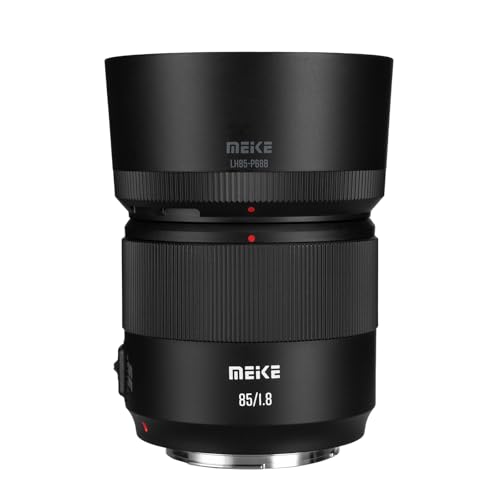 |
Meike 85mm f/1.8 SE II | Autofocus functionality | Solid aperture range | Full frame coverage | View on Amazon | Read Review |
| High Resolution Prime | Meike 85mm f/1.8 Mark II | Crisp sharpness | Reliable autofocus | Smooth bokeh rendering | View on Amazon | Read Review | |
| Sharp Bokeh Master |  |
Sony 85mm f/1.8 Prime | Excellent bokeh | Fast, quiet autofocus | Lightweight for 85mm | View on Amazon | Read Review |
More Details on Our Top Picks
-
Canon EF 50mm f/1.8 STM
This lens is the classic starting point for any photographer. It offers a bright aperture that allows you to isolate your subject against a beautifully blurred background.
The compact design makes it a lightweight companion for long days of shooting. You might find the autofocus slightly noisy compared to modern silent systems, but for the clarity it provides, it remains a staple in every kit.
- Lens Mount:Canon EF
- Focal Length:50mm
- Maximum Aperture:f/1.8
- Focus Type:STM
- Brand:Canon
- Additional Feature:Metal lens mount
- Additional Feature:Smooth STM focusing
- Additional Feature:Seven blade aperture
-
Canon RF 50mm f/1.8 STM
If you use a modern EOS R body, this is your go-to walkaround lens. It provides a natural field of view that mimics the human eye, making it incredibly versatile for casual portraiture.
You will appreciate the close-focusing capability, which helps when you need to capture tight details. It is a tiny lens that packs a serious punch regarding image quality.
- Lens Mount:Canon RF
- Focal Length:50mm
- Maximum Aperture:f/1.8
- Focus Type:STM
- Weight:160g
- Brand:Canon
- Additional Feature:Close focus at 0.30m
- Additional Feature:Silent STM motor
- Additional Feature:Customizable control ring
-
Canon RF 24-70mm f/2.8 L
This is the lens you choose when you cannot afford to miss a single moment. It acts as a swiss-army knife, handling everything from wide environmental portraits to tight headshots without needing a lens change.
The constant f/2.8 aperture ensures you have consistent light intake throughout the entire zoom range. It is heavy, but the optical performance is a clear step above standard glass.
- Lens Mount:Canon RF
- Focal Length:24-70mm
- Maximum Aperture:f/2.8
- Focus Type:Nano USM
- Weight:900g
- Brand:Canon
- Additional Feature:Up to 5-stop stabilization
- Additional Feature:Dust and weather resistance
- Additional Feature:Complex 21-element design
-
EF 85mm f/1.8 Manual Focus
This lens is for those who prefer the deliberate pace of manual control. By forcing you to slow down and compose, it encourages a more intentional approach to framing your subject.
It provides a flattering focal length for faces, minimizing distortion to keep features looking natural. Be prepared to put in the work to nail your focus manually, as it lacks internal motors.
- Lens Mount:Canon EF
- Focal Length:85mm
- Maximum Aperture:f/1.8
- Focus Type:Manual
- Brand:Canon/Compatible
- Additional Feature:Smooth focus ring
- Additional Feature:Full frame compatible
- Additional Feature:Wide aperture light gathering
-
Sony FE 50mm f/1.8
Sony users looking for a budget-friendly prime will find this lens a solid performer. It provides a sharp image center that is ideal for portrait work where you want the eyes to pop.
It is simple and to the point, removing the clutter of extra buttons or switches. While the focus speed is moderate, it performs well for planned portrait sessions where subjects are relatively still.
- Lens Mount:Sony FE
- Focal Length:50mm
- Maximum Aperture:f/1.8
- Focus Type:Auto/Manual
- Brand:Sony
- Additional Feature:Aspherical lens elements
- Additional Feature:Seven blade circular aperture
- Additional Feature:Metal mount construction
-
Tamron 17-70mm f/2.8 VC
This lens is the perfect partner for APS-C sensors. It covers a wide zoom range that handles group shots and tight portraits with equal competence.
The inclusion of vibration compensation is a lifesaver when shooting handheld in dim conditions. It is a workhorse that keeps your workflow moving without needing to swap lenses constantly.
- Lens Mount:Sony E
- Focal Length:17-70mm
- Maximum Aperture:f/2.8
- Focus Type:RXD AF
- Weight:525g
- Brand:Tamron
- Additional Feature:Moisture resistant construction
- Additional Feature:Close focus at 0.19m
- Additional Feature:Compact zoom design
-
Canon RF 85mm f/2 Macro
This lens offers a rare combination of portrait utility and macro functionality. You can capture a beautiful headshot and then immediately zoom in on a wedding ring or small detail.
The built-in stabilization provides extra confidence when you are shooting in low-light environments. It is a sharp, crisp lens that brings out fine textures in every shot.
- Lens Mount:Canon RF
- Focal Length:85mm
- Maximum Aperture:f/2
- Focus Type:STM
- Weight:500g
- Brand:Canon
- Additional Feature:Hybrid image stabilization
- Additional Feature:Customizable control ring
- Additional Feature:0.35m minimum focus
-
Meike 85mm f/1.8 SE II
Finding an affordable autofocus lens for portraits can be difficult, but this unit bridges that gap. It is a dedicated portrait focal length that delivers soft backgrounds and clear subjects.
It is surprisingly capable for its tier, offering a respectable focus speed for most portrait scenarios. If you want the bokeh of an 85mm without the premium price, this is a logical choice.
- Lens Mount:Canon EF
- Focal Length:85mm
- Maximum Aperture:f/1.8
- Focus Type:STM
- Brand:Meike
- Additional Feature:Multi-layer coating
- Additional Feature:Compact body design
- Additional Feature:Full frame support
-
Meike 85mm f/1.8 Mark II
This updated version focuses on high-resolution output suitable for modern sensors. It creates a smooth fall-off that makes subjects stand out from the background effectively.
The lens feels substantial in the hand and handles portrait compression beautifully. It is a specialized tool that ignores zoom convenience in favor of pure image clarity.
- Lens Mount:Canon EF
- Focal Length:85mm
- Maximum Aperture:f/1.8
- Focus Type:STM
- Brand:Meike
- Additional Feature:8K resolution support
- Additional Feature:Metal mounting plate
- Additional Feature:Optimized lens coatings
-
Sony 85mm f/1.8 Prime
If you want professional-looking portraits on a Sony body, this lens delivers. It is a portrait specialist that creates a creamy blur which makes your subjects look like they are popping off the screen.
The focusing is fast, silent, and reliable, making it great for candid work. It is a must-have lens for anyone serious about upgrading their portrait photography.
- Lens Mount:Sony FE
- Focal Length:85mm
- Maximum Aperture:f/1.8
- Focus Type:Auto/Manual
- Brand:Sony
- Additional Feature:Customizable focus hold button
- Additional Feature:Dust and moisture resistant
- Additional Feature:Nine blade aperture
Frequently Asked Questions
Should I buy a prime lens or a zoom lens for portraits?
Prime lenses offer wider apertures and generally provide better image quality for the price. They force you to move your feet to find the best composition, which often leads to more creative framing. Zooms offer the convenience of multiple focal lengths without needing to change glass. They are ideal if you work in fast-paced environments where you cannot afford to miss a moment by swapping lenses.
Is an 85mm lens better than a 50mm lens?
An 85mm lens provides superior facial compression that is universally flattering for portraits. It keeps your subject at a comfortable distance while blurring the background more aggressively than a wider lens. A 50mm lens is more versatile for environmental portraits. It allows you to include more of the surroundings while still maintaining a natural look.
What does the f-number actually do for my portraits?
The f-number represents the size of the aperture opening. A lower number like f/1.4 lets in more light and creates a very shallow depth of field. This blurs the background significantly, which keeps the viewer's focus on the subject's eyes. Higher f-numbers bring more of the scene into focus. Use these when you want the background details to remain recognizable or if you are shooting a group of people.
Do I need image stabilization in my portrait lens?
Image stabilization is helpful if you shoot at slower shutter speeds or in dark settings. It compensates for minor hand tremors that could otherwise ruin a crisp portrait. However, many modern cameras have in-body stabilization that works with any lens you attach. Check your camera specs before paying extra for a lens that includes this feature.
Why are some lenses much more expensive than others?
Higher prices usually reflect superior optical glass and better build quality. Expensive lenses often feature weather sealing to protect your gear from moisture and dust during outdoor shoots. Premium lenses also minimize chromatic aberration, which is that distracting purple or green fringing around high-contrast edges. You are essentially paying for consistency and fewer headaches in post-production.