

Where should you even start when building a personal studio? Choosing your first gear is like picking a partner for a long dance: you want someone who moves with you, not against you.
Finding the Best Synthesizers for Beginners is about balancing curiosity with clear, actionable tools. Stick around to see which specific items turn those initial sonic sparks into actual musical progress.
Key Takeaways
- Prioritize models that offer immediate visual feedback through screens or clear signal paths.
- Select instruments with internal speakers if you want to play without setting up external amplifiers.
- Choose hardware that provides a tactile interface, such as touchpads or physical keys, to help build muscle memory.
- Seek out guides that use letter diagrams or simple maps if you lack formal music theory training.
- Check that the power source matches your workspace, whether that means USB connectivity or dedicated battery compartments.
| Best Hands-On Introduction |  |
Portable DIY Touchpad Music Synthesizer | Extremely approachable layout | Great for hobbyist learners | Very compact size | View on Amazon | Read Review |
| Unique Spatial Experience |  |
Moog Theremini Gesture Controlled Synthesizer | Intuitive gesture control | Includes helpful visual tuner | High quality sound engine | View on Amazon | Read Review |
| Compact Sonic Exploration |  |
KKnoon Mini Electronic Theremin Module | Very portable form factor | Vibrant color display | Multiple adjustable voices | View on Amazon | Read Review |
| Essential Theoretical Foundation | 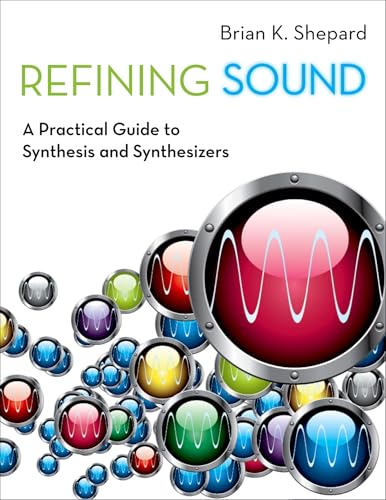 |
Refining Sound Practical Synthesis Guide | Clear instructional writing | Deep conceptual explanations | Professional grade knowledge | View on Amazon | Read Review |
| Practical Player Guide |  |
Essential Synthesizer Techniques Handbook | Easy to follow instructions | Covers essential playing techniques | Focused on beginner success | View on Amazon | Read Review |
| Fun Musical Roadmap |  |
Otamatone Beginner Songbook Guide | No music reading required | Extensive song library | Simple visual diagrams | View on Amazon | Read Review |
| Comprehensive Learning Path | Synthesizer Mastery Skills Book | Well organized progression | Builds confidence quickly | Thorough technical coverage | View on Amazon | Read Review |
More Details on Our Top Picks
-
Portable DIY Touchpad Music Synthesizer
If you want to understand how sound is actually built from scratch, this DIY kit is a fantastic starting point. It uses a simple 8-key touchpad interface that feels like a playful science project rather than a formal instrument.
The design is meant to be accessible, so you do not need prior music theory knowledge to make noise. However, because it is a novelty device, it lacks the advanced signal routing found in professional-grade gear.
- Instrument Type:Portable synthesizer
- Interface Style:8-key touchpad
- Skill Level:Absolute beginner
- Additional Feature:Battery operated design
- Additional Feature:Educational build process
- Additional Feature:Lightweight portable frame
-
Moog Theremini Gesture Controlled Synthesizer
Playing the Moog Theremini is like conducting an invisible orchestra. You control pitch and volume by moving your hands through the electromagnetic fields around the antennas, which creates a very fluid and organic sound.
It includes a built-in tuner to help you stay on pitch, which is a massive help for beginners. Just keep in mind that the spatial control method requires a high level of physical coordination that differs from traditional keyboards.
- Instrument Type:Theremin synthesizer
- Interface Style:Gesture/proximity sensors
- Display Type:LCD screen
- Skill Level:Intermediate beginner
- Additional Feature:Built-in speaker
- Additional Feature:Adjustable scale quantization
- Additional Feature:MIDI over USB connectivity
-
KKnoon Mini Electronic Theremin Module
This tiny module is a clever way to experience electronic sound manipulation without needing a massive studio setup. It comes with a color screen that makes it much easier to visualize what your sound waves are doing in real time.
It is small enough to fit in a pocket, making it perfect for musicians who travel frequently. Be aware that the knob-based interface is quite small, so it might be tricky for those with larger hands to adjust with surgical precision.
- Instrument Type:Digital theremin
- Display Type:Color screen
- Skill Level:Beginner
- Additional Feature:Adjustable sensitivity settings
- Additional Feature:Multiple waveform options
- Additional Feature:Built-in audio output
-
Refining Sound Practical Synthesis Guide
You cannot master the machine if you do not understand the sound physics behind it. This book breaks down complex concepts like subtractive synthesis into digestible lessons that apply to almost any keyboard you might buy later.
It is written for people who prefer reading and logic over random button pushing. Since it is purely a textbook resource, you will need to provide your own synthesizer to practice the techniques explained in the chapters.
- Skill Level:Beginner to advanced
- Additional Feature:Step by step tutorials
- Additional Feature:Detailed synthesis diagrams
- Additional Feature:Practical sound design exercises
-
Essential Synthesizer Techniques Handbook
If you already have a keyboard but feel overwhelmed by the signal path, this guide is your best friend. It focuses on keyboard techniques and common configurations, ensuring you spend less time frustrated and more time playing music.
The writing style is straightforward and avoids overly technical jargon where possible. Just note that this is a supplemental resource rather than a hardware instrument, so it works best when you have a synth in front of you.
- Skill Level:Beginner
- Additional Feature:Troubleshooting common issues
- Additional Feature:Performance tips for beginners
- Additional Feature:Patch creation basics
-
Otamatone Beginner Songbook Guide
If you have an Otamatone and want to actually play songs instead of just making random chirps, this is the book you need. It uses letter diagrams instead of standard notation, which makes it perfect for people who never learned to read music.
It covers a wide variety of genres, from classical pieces to viral memes. Because it is tailored specifically for a niche instrument, the playing techniques will not translate to standard synthesizers or pianos.
- Skill Level:Absolute beginner
- Additional Feature:Includes 100 easy songs
- Additional Feature:Three levels of difficulty
- Additional Feature:Letter based note maps
-
Synthesizer Mastery Skills Book
Think of this book as a structured curriculum for your musical journey. It takes you from the very basics of turning the machine on to creating your own unique sound patches with confidence.
It is organized to build your skills in a logical order, preventing the common "information overload" that plagues new synth owners. However, like any good book, it requires consistent practice to actually build the muscle memory needed for live performance.
- Skill Level:Beginner to intermediate
- Additional Feature:Practical exercises included
- Additional Feature:Expert performance strategies
- Additional Feature:Synthesizer history overview