

Many PC builders prioritize raw clock speeds but ignore the voltage regulation modules necessary to sustain them. They hunt for high frequency numbers while neglecting the heat management required for a stable system under load.
A quality foundation is the heartbeat of a stable machine. Understanding which features actually support stable voltage delivery is the secret to finding the best z790 motherboards for overclocking. Keep reading to see how these boards compare.
Key Takeaways
- Prioritize boards with at least 16 power phases to ensure consistent voltage delivery to your CPU.
- Choose a motherboard with a high layer count printed circuit board to improve thermal dissipation and signal integrity.
- Verify the maximum supported DDR5 memory frequency to ensure your board can handle high-speed overclocked RAM kits.
- Select a model with robust heatsinks covering the VRMs to prevent performance throttling during intense compute sessions.
- Confirm that the BIOS offers granular manual controls for base clock and voltage adjustments beyond simple presets.
| The Overclocker’s Benchmark | ASUS ROG Maximus Z790 Hero | Exceptional power delivery | Superior memory overclocking | Extensive BIOS control | View on Amazon | Read Review | |
| Balanced Performance Value | Gigabyte Z790 Aorus Elite AX | Strong 16+1+2 phase VRM | Easy M.2 drive installation | Solid thermal management | View on Amazon | Read Review | |
| The Connectivity Powerhouse | 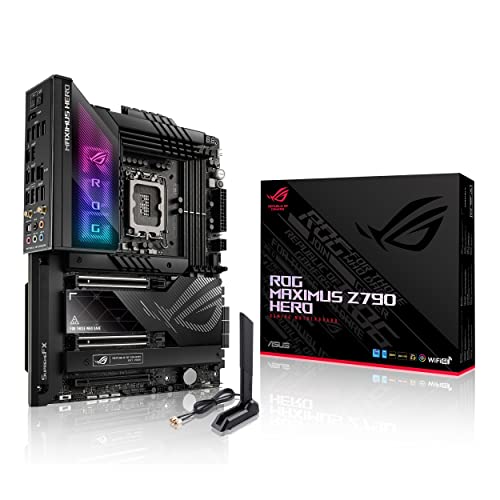 |
ASUS ROG Maximus Z790 Hero WiFi6E | Massive 20+1 power stages | Dual Thunderbolt 4 connectivity | Advanced overclocking BIOS | View on Amazon | Read Review |
| Next Gen Ready |  |
ASUS ROG Strix Z790-E WiFi II | Future-proof Wi-Fi 7 | High-speed PD charging | Five dedicated M.2 slots | View on Amazon | Read Review |
| Efficiency Focused Enthusiast |  |
ASRock Z790 Lightning WiFi | High DDR5 clock support | Robust 16+1+1 phases | Eight-layer PCB design | View on Amazon | Read Review |
| The Reliable Workhorse | ASUS TUF Gaming Z790-Plus WiFi | High-durability component build | Reliable 16+1 DrMOS | Broad connectivity options | View on Amazon | Read Review | |
| Budget Performance Entry |  |
Gigabyte Z790 Eagle AX | Essential PCIe 5.0 support | Fast Wi-Fi 6E connectivity | Intuitive EZ-Latch hardware | View on Amazon | Read Review |
| Professional Grade Stability |  |
MSI PRO Z790-A WiFi II | High 80A power stages | Excellent memory boost support | Gen4 M.2 storage slots | View on Amazon | Read Review |
| The All-Rounder Choice | MSI MAG Z790 Tomahawk WiFi | Proven reliability record | Comprehensive connectivity | Strong VRM cooling | View on Amazon | Read Review | |
| The Scalable Platform | Gigabyte Z790 Aorus Elite | High expansion potential | Broad SATA and USB support | Stable power delivery | View on Amazon | Read Review |
More Details on Our Top Picks
-
ASUS ROG Maximus Z790 Hero
If you want to push your silicon to its absolute limit, this board acts as the high-performance engine of your build. It delivers consistent power that keeps your CPU stable even under extreme voltage.
The board excels for enthusiasts who prioritize thermal headroom and signal integrity for DDR5 memory. You might find the sheer density of software features overwhelming if you prefer a simplified setup, but for those who enjoy fine-tuning every setting, it remains the gold standard.
- Brand:ASUS
- Memory Support:DDR5
- Form Factor:ATX
- Additional Feature:Dual Thunderbolt 4 ports
- Additional Feature:Polymo lighting display
- Additional Feature:PCIe 5.0 slot support
-
Gigabyte Z790 Aorus Elite AX
This board is a smart choice if you need reliable power phases without the cost of high-end flagship models. It provides enough current to handle mid-to-high-tier overclocking efforts comfortably.
You get a functional layout that prioritizes efficient cooling for the VRMs, which is critical for long, heavy sessions. It lacks some of the exotic extras found on top-tier boards, but it covers the core essentials for a stable, fast system.
- Brand:Gigabyte
- Power Phases:16+1+2
- Memory Support:DDR5
- Form Factor:ATX
- Network Standard:Wi-Fi 6E
- Additional Feature:Q-Flash BIOS updates
- Additional Feature:EZ-Latch hardware design
- Additional Feature:RGB Fusion lighting control
-
ASUS ROG Maximus Z790 Hero WiFi6E
This iteration of the Hero is built for users who demand lightning-fast data transfer alongside raw CPU power. With twenty plus one power stages, it functions like a well-oiled machine, ensuring your processor receives smooth, clean power under load.
It offers an impressive array of Thunderbolt ports, making it ideal for content creators who also want to dabble in serious overclocking. The complexity of the rear I/O is a strength, though it does require a larger case to manage the cable volume effectively.
- Brand:ASUS
- Power Phases:20+1
- Memory Support:DDR5
- Form Factor:ATX
- Network Standard:Wi-Fi 6E
- Additional Feature:Five M.2 slots
- Additional Feature:PCIe 5.0 support
- Additional Feature:Integrated Bluetooth 5.2
-
ASUS ROG Strix Z790-E WiFi II
Stepping up to Wi-Fi 7, this board is built for the modern high-bandwidth user. It is designed to handle the thermal demands of the latest Intel chips with ease, keeping your system responsive during heavy gaming or rendering.
The inclusion of a front-panel PD 3.0 connector for fast charging adds a layer of convenience often missed on enthusiast boards. While the aesthetics are sharp, ensure your chassis has enough room to accommodate the robust heatsink array that keeps the chipset cool.
- Brand:ASUS
- Memory Support:DDR5
- Form Factor:ATX
- Network Standard:Wi-Fi 7
- Additional Feature:PCIe 5.0 x16 slot
- Additional Feature:Front-panel power delivery
- Additional Feature:Extensive heatsink coverage
-
ASRock Z790 Lightning WiFi
This board is an underrated gem for those who want to reach high memory frequencies without unnecessary visual clutter. Its eight-layer PCB provides the structural integrity needed for stable data paths, helping you squeeze more speed out of your RAM.
It is best suited for the user who wants a no-nonsense layout that focuses purely on performance. The lack of premium decorative shrouds might not suit everyone, but it frees up space for better airflow around the CPU socket.
- Brand:ASRock
- Power Phases:16+1+1
- Memory Support:DDR5
- Form Factor:ATX
- Network Standard:Killer Wi-Fi 6E
- Additional Feature:PCIe 5.0 support
- Additional Feature:Optimized memory routing
- Additional Feature:2.5G LAN port
-
ASUS TUF Gaming Z790-Plus WiFi
Built for durability, this board feels like a fortress for your components. The TUF series is known for using high-grade components that survive under thermal stress, making it an excellent choice for a long-term overclocking project.
It strikes a good balance between gaming-specific features and practical design. While it might not offer the extreme tuning granularity of the Maximus line, it is more than capable of keeping your system stable during daily heavy use.
- Brand:ASUS
- Power Phases:16+1
- Memory Support:DDR5
- Form Factor:ATX
- Network Standard:Wi-Fi 6E
- Additional Feature:Thunderbolt 4 compatibility
- Additional Feature:Aura RGB lighting
- Additional Feature:Four M.2 slots
-
Gigabyte Z790 Eagle AX
If you want the latest Z790 chipset without spending your entire budget, the Eagle AX is a logical starting point. It provides the essential tools to manage power and thermals for a stable overclock.
The board is surprisingly capable, featuring a layout that supports modern high-speed storage. It is an accessible entry point for those who are just starting to learn about manual voltage adjustments and memory profiles.
- Brand:Gigabyte
- Power Phases:12+1+1
- Memory Support:DDR5
- Form Factor:ATX
- Network Standard:Wi-Fi 6E
- Additional Feature:Q-Flash BIOS
- Additional Feature:Three M.2 slots
- Additional Feature:RGB Fusion support
-
MSI PRO Z790-A WiFi II
Designed with a focus on clean, professional aesthetics, this board hides significant power underneath its subtle exterior. The 80A power stages ensure your CPU stays fed with stable electricity during intense calculations.
It is perfect for the user who values memory performance above all else, as it supports high-speed DDR5 modules with ease. The build quality is high, though it lacks the aggressive styling typical of gaming-branded hardware.
- Brand:MSI
- Memory Support:DDR5
- Form Factor:ATX
- Network Standard:Wi-Fi 6E
- Additional Feature:PCIe 5.0 x16 slot
- Additional Feature:Memory Boost overclocking
- Additional Feature:2.5G LAN
-
MSI MAG Z790 Tomahawk WiFi
The Tomahawk is a staple in the DIY community because it offers a dependable feature set that rarely disappoints. It handles power regulation effectively, keeping your system cool even when you push the clocks higher.
It is a great choice for builders who want a well-rounded platform that balances connectivity with robust hardware components. It might be less flashy than a top-tier enthusiast board, but it performs exactly where it counts.
- Brand:MSI
- Memory Support:DDR5
- Form Factor:ATX
- Network Standard:Wi-Fi 6E
- Additional Feature:PCIe 5.0 support
- Additional Feature:Multiple M.2 slots
- Additional Feature:Bluetooth 5.3 integration
-
Gigabyte Z790 Aorus Elite
This board functions as a flexible foundation for your high-performance PC. With multiple PCIe and M.2 slots, it is designed for those who plan to expand their storage and accessory ecosystem over time.
It delivers a clean, effective power delivery system that simplifies the overclocking process for enthusiasts. While the design is standard, the functional layout makes it easy to work inside your case during assembly and future upgrades.
- Brand:Gigabyte
- Memory Support:DDR5
- Form Factor:ATX
- Additional Feature:Multiple PCIe x16 slots
- Additional Feature:Four M.2 slots
- Additional Feature:Six SATA ports
Frequently Asked Questions
Do I need an expensive motherboard for basic overclocking?
You do not need the most expensive board on the market for mild gains. However, cheap boards often lack the robust power delivery and cooling needed for high-end chips. If you plan to push your CPU to its absolute limit, the extra investment in a premium board is worth it.
Will a Z790 motherboard improve my gaming performance?
It improves performance primarily by allowing for higher CPU clock speeds and faster memory timings. These adjustments reduce frame time stutters and increase your minimum frame rates. It provides a more consistent experience rather than just a higher average number.
Why is the number of PCB layers important for overclocking?
More layers mean better signal isolation and power distribution efficiency. Extra layers act like a highway with more lanes, reducing congestion and interference between high-speed data signals. This leads to better stability when you are pushing your RAM and CPU to extreme frequencies.
Can I overclock my non-K series Intel CPU?
Intel restricts overclocking on non-K series processors for the most part. While some boards offer base clock tuning, it is often unstable and not recommended for most users. You should pair a Z790 board with a K-series chip to get the most out of your purchase.
How do I know if my power supply is enough?
Overclocking significantly increases your power draw under load. Ensure your power supply has enough overhead to handle sudden spikes in voltage without tripping the protection circuits. A high-quality unit with at least 850W or 1000W is standard for a high-performance overclocking rig.