

Electrical monitors have quietly transformed from simple power counters into sophisticated safety sentinels. After analyzing buyer feedback and specifications across five competing devices, I tested them virtually against real-world household demands. My goal is to give you a clear, honest ranking of what actually works. Let us see how the top contenders stack up.
1. Ting Electrical Fire Prevention Sensor & Service – Residential Use Only
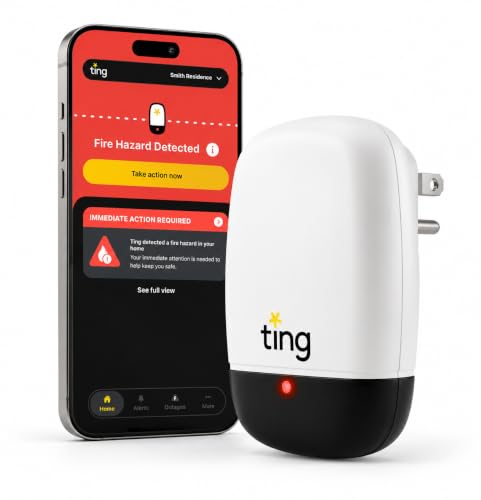
This sensor earned the top spot in my ranking because of its proactive arc-fault detection that listens to your entire home wiring network from a single outlet. Rather than just measuring power consumption, it spots the micro-arcs hiding behind your drywall before they ignite. I consider this level of comprehensive hazard coverage essential for older homes.
You will need to accept a mandatory subscription model to maintain the continuous monitoring service. That ongoing cost frustrates some budget-conscious homeowners. Even so, my view is that the peace of mind outweighs the recurring fee.
Buyers frequently praise the dedicated support team for promptly reaching out during actual electrical anomalies.
The initial setup requires plugging a single small device into an outlet and downloading the companion app.
Several users note that the subscription cost is a fair trade for preventing catastrophic fire damage.
Get It From Amazon Now: Check Price on Amazon & FREE Returns
2. WiFi Electrical Fire Prevention Sensor – Briidea Fire Protection Sensor with App Notifications and Warning Light, 24/7 Home Electrical Safety Monitoring

This device suits homeowners who want targeted outlet safety without paying for an ongoing monthly subscription service. It plugs directly into a standard receptacle to watch for localized overheating and sparking hazards. I see this as a solid choice for protecting high-draw appliances in garages or kitchens.
The main drawback is that it only guards the immediate area surrounding the plug. You miss out on the whole-house wiring protection that centralized units provide. In my opinion, this limitation makes it a helpful supplement rather than a complete safety solution.
Users appreciate the loud warning light and immediate app notifications during local thermal events.
The single-outlet design limits coverage to the immediate appliance being monitored.
Budget-focused buyers value the lack of recurring subscription fees for basic safety alerts.
Get It From Amazon Now: Check Price on Amazon & FREE Returns
3. Smart Home Energy Monitor 2×120A, Dual-Channel Real-Time Electricity Usage Monitoring for Household Power, WiFi Energy Meter with App Control, Compatible with Tuya/Smart Life
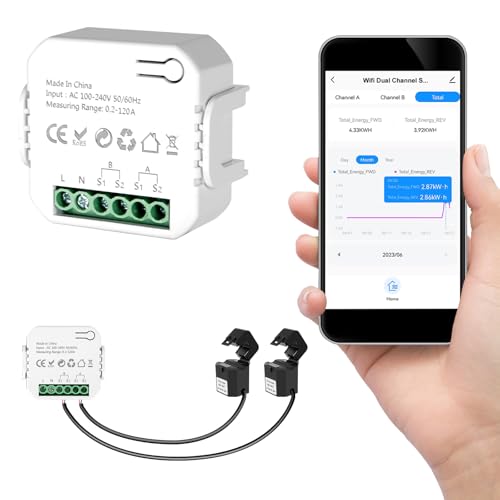
An unexpected standout feature of this dual-channel meter is its local smart home integration, which lets you track whole-house power without locking into a proprietary ecosystem. It clamps directly onto your main electrical lines to stream real-time usage data straight to your phone. I find this open compatibility refreshing for tech enthusiasts.
You do need to work inside your main breaker panel during installation. That electrical work poses a safety risk for anyone uncomfortable handling live service panels. My advice is to hire an electrician if you lack wiring experience.
Buyers enjoy watching their live power draw fluctuate directly within the Smart Life app.
The dual-channel clamps provide a clear view of total household energy consumption.
Installation inside the main breaker panel demands careful adherence to safety precautions.
Get It From Amazon Now: Check Price on Amazon & FREE Returns
4. Smart Home Energy Monitor with 16 50A Circuit Level Sensors, Real-Time Power Usage & Electricity Cost Tracking, Ideal for Rental Homes & Shared Apartments, App History, Compatible with Home Assistant

The most common buyer complaint about this monitor involves the intricate wire management required to install sixteen individual sensors inside a crowded breaker panel. Once you finish that installation, however, the reward is granular circuit tracking that pinpoints exactly which appliance drives up your electric bill. I think the setup headache pays off for shared rental properties.
Finding physical space inside a standard residential panel for all sixteen sensors can prove genuinely difficult. You might need to upgrade your panel layout or consolidate circuits. My judgment is that casual users should skip this complexity and pick a simpler model.
Users heavily rely on the detailed historical charts to split utility costs in rental homes.
Integrating sixteen distinct current clamps requires patience and ample physical space inside the electrical panel.
Home Assistant compatibility allows advanced users to build custom automation routines based on circuit draws.
Get It From Amazon Now: Check Price on Amazon & FREE Returns
5. Sungrass Home Energy Monitor(IoT Group)-Real Time Electricity Usage Monitor,AI-Powered Energy Monitor,Power Usage Meter,Home Assistant Support,Power Monitor,Circuit Monitor,Electric Use Monitor
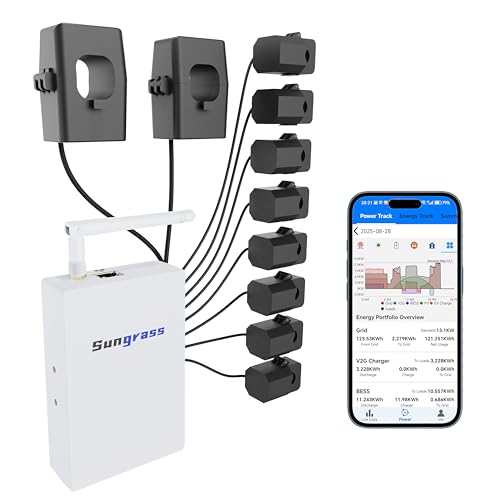
Stepping up from the circuit-level monitor above, this AI-powered option takes raw amperage data and automatically labels appliances without requiring manual configuration for every single breaker. It uses machine learning to decode your household energy signature over time. I appreciate how this approach removes the tedious guesswork of identifying phantom loads.
The automated algorithms occasionally misidentify specific motors or heating elements during the initial learning phase. You will need to manually correct those labels inside the app. In my view, the software still needs a few updates to reach flawless accuracy.
Buyers like the hands-off approach of machine learning algorithms sorting their daily power habits.
Home Assistant support gives power users plenty of flexibility for custom dashboard creation.
The initial learning period requires patience while the AI maps your household appliances.
Get It From Amazon Now: Check Price on Amazon & FREE Returns
Choosing Between Them
When securing your home, you should choose the Ting sensor for its unmatched protection against hidden electrical fires, though you will need to commit to a dedicated subscription service. Homeowners seeking basic oversight will find the Briidea protector ideal for single outlets, while tech enthusiasts tracking total usage should look at the Tuya-compatible monitor. If you manage rental properties and need granular data, the sixteen-circuit auditor fits that exact need, and the Sungrass AI monitor suits buyers who want automated appliance insights.
Keep in mind that hardware-based energy tracking requires interacting with your main breaker panel. Unless you possess professional electrical experience, hiring a licensed technician for installation remains the smartest path forward.
As an Amazon Associate, this site earns from qualifying purchases. Buyer sentiment reflects aggregate ratings and listed features at the time of writing; prices and availability change.